

Trusted Manufacturing Equipment Supplier | DK Tooling and Industrial Solutions
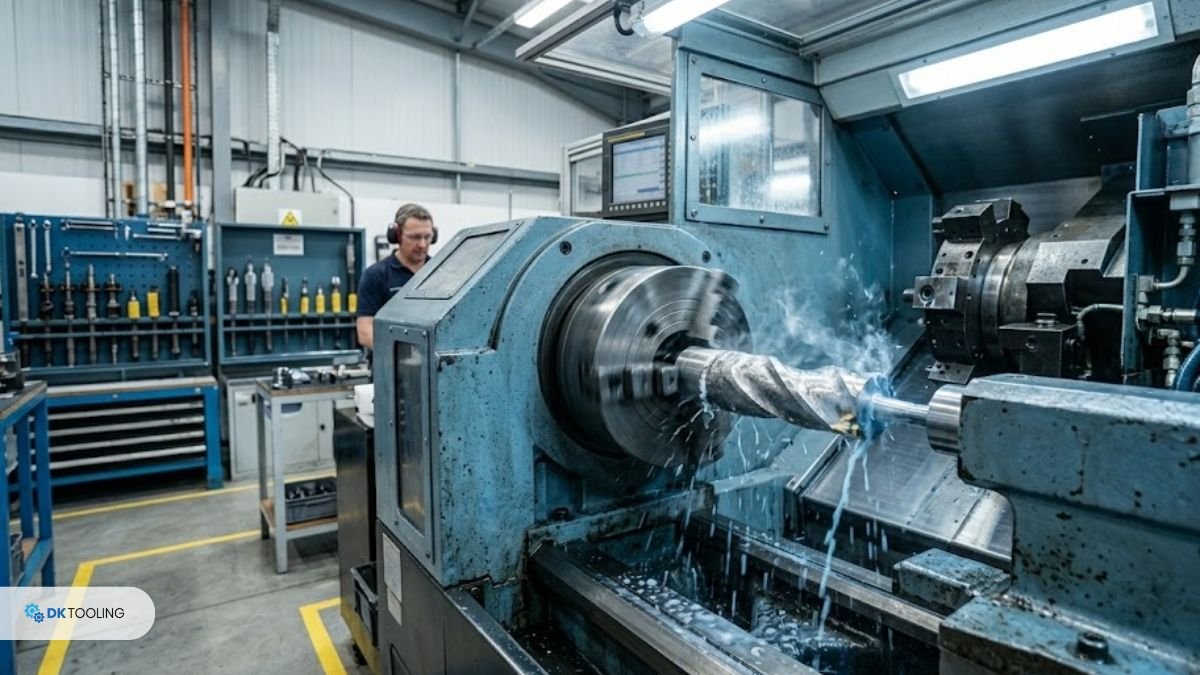
What is a manufacturing equipment supplier?
A manufacturing equipment supplier provides industrial machinery, precision tooling, cutting tools, and component solutions that enable factories to achieve higher production output, tighter quality control, and lower operational costs across sectors including automotive, aerospace, medical, and general engineering.
KEY TAKEAWAYS
- US manufacturing output increased 1.3% year-on-year in April 2026, marking four consecutive months of production growth
- Predictive maintenance and quality tooling can reduce unplanned downtime by up to 50%
- 62% of industrial buyers now purchase supplies online, up from 45% in 2018
- Reshoring investments exceeding $200 billion have been announced in 2025–2026
- The right equipment supplier delivers 25–40% lower maintenance costs through quality tooling
- Digital procurement platforms have reduced industrial buying cycles by 30–40%
Table of Contents
INTRODUCTION
If you manage procurement, maintenance, or production for a US manufacturing facility, you’ve felt the pressure. Input costs are rising. Supply chains remain unpredictable. And every hour of unplanned downtime eats into margins that were already tight.
ISO 9001:2015-certified suppliers with documented quality management systems demonstrate 35% fewer delivery delays than non-certified alternatives.
The Institute for Supply Management’s Manufacturing PMI reached 54.0 in May 2026 — the highest reading since May 2022 — indicating accelerating factory activity across the United States. But with that growth comes increased demand for reliable tooling, replacement parts, and consumables.
This guide walks you through what separates a dependable manufacturing equipment supplier from one that adds cost, complexity, and risk. No fluff. No generic advice. Just practical decision-making frameworks for industrial buyers.

WHY SUPPLIER SELECTION MATTERS MORE IN 2026
Three forces are reshaping industrial procurement.
First, reshoring is real. Major companies have announced over $200 billion in US production expansion investments during 2025–2026, led by life sciences ($55 billion from Johnson & Johnson alone), semiconductors ($16 billion from GlobalFoundries), and automotive manufacturing ($13 billion from Stellantis). This expansion creates urgent demand for tooling and equipment.
Second, industrial ecommerce has matured. 62.3% of buyers now purchase electrical, HVAC, or industrial supply products online, representing 30% of total purchases — a 702% increase since 2018. Digital self-service is no longer optional.
Third, input costs and supplier delivery times remain volatile. Factory input costs reached their highest level since June 2022 in May 2026, and buyers are increasingly focused on suppliers that can support operational continuity rather than simply offering the lowest price.
The companies that thrive in this environment don’t just buy equipment. They partner with manufacturing equipment suppliers who understand production realities.
CURRENT STATE OF US MANUFACTURING
Key Statistics (Q2 2026)

Manufacturing Production Growth Streak
US manufacturing production has now recorded four consecutive months of growth: January (+0.5%), February (+0.4%), March (+0.1%), and April (+0.6%). This sustained expansion signals genuine momentum, not a short-term spike.
COMMON PROCUREMENT PAIN POINTS
Industrial buyers across the United States consistently report the same frustrations. Each one directly affects your bottom line.
Production Delays
Late tooling deliveries idle production lines. Every hour of downtime costs mid-sized facilities an average of $5,000–$15,000 in lost output and labour. Suppliers without robust inventory management or transparent lead-time communication are the primary cause.
Machine Downtime
Unplanned equipment failures remain the single largest controllable cost in manufacturing. McKinsey research shows predictive maintenance and quality tooling can reduce equipment downtime by up to 50% and lower maintenance costs by 10–40%.
Supplier Reliability
Inconsistent quality, missed delivery windows, and poor communication erode trust. The May 2026 Demand Index from Supplier.io shows buyers increasingly searching for suppliers that can “help them operate through pressure” rather than those offering the lowest price.
Inventory Problems
Stockouts of critical tooling force emergency purchasing at premium prices. Conversely, excess inventory ties up working capital. The right supplier offers visibility into stock levels and predictable replenishment cycles.
Maintenance Costs
Cutting tools that wear prematurely drive up consumables spend. Poor-quality tooling damages workpieces and machinery alike. Quality-focused suppliers reduce total cost of ownership even with higher upfront pricing.
Procurement Challenges
Long approval cycles, unclear specifications, and lack of technical support slow down purchasing. Modern procurement demands self-service access to product data, pricing, and availability — 24/7.
Lead Time Issues
Extended lead times for standard tooling force buyers to over-order or accept production compromises. Suppliers with domestic stocking locations provide significant competitive advantage.
Budget Constraints
Capital equipment budgets face scrutiny, but maintenance and consumables budgets are often squeezed harder. Demonstrating ROI and total cost of ownership has become essential for approval.
HOW TO CHOOSE A MANUFACTURING EQUIPMENT SUPPLIER
Step 1: Define Your Requirements
Start with a clear specification. What materials are you machining? What tolerances must you hold? What is your production volume? Without these answers, you cannot evaluate capability.
Step 2: Verify Certifications and Quality Systems
ISO 9001 certification indicates documented quality management processes. For precision manufacturing, AS9100 (aerospace) or IATF 16949 (automotive) may be required. Request quality reports from recent audits.
Step 3: Assess Technical Capability
Does the supplier understand your applications? Can their engineers provide process recommendations? A manufacturing equipment supplier with deep technical expertise prevents costly mistakes.
Step 4: Evaluate Inventory and Logistics
What standard products are stocked domestically? What are typical lead times? Can they provide emergency support? These questions separate distributors from true supply partners.
Step 5: Request References and Samples
Speak with existing customers in similar industries. Run sample parts with candidate tooling. The investment in validation prevents months of production headaches.
Step 6: Review Pricing and Terms
Compare total cost of ownership, not purchase price. Evaluate payment terms, volume discounts, and warranty coverage. Understand return policies for defective or non-performing products.
PRODUCT RECOMMENDATIONS FROM DK TOOLING
Shop New Arrivals
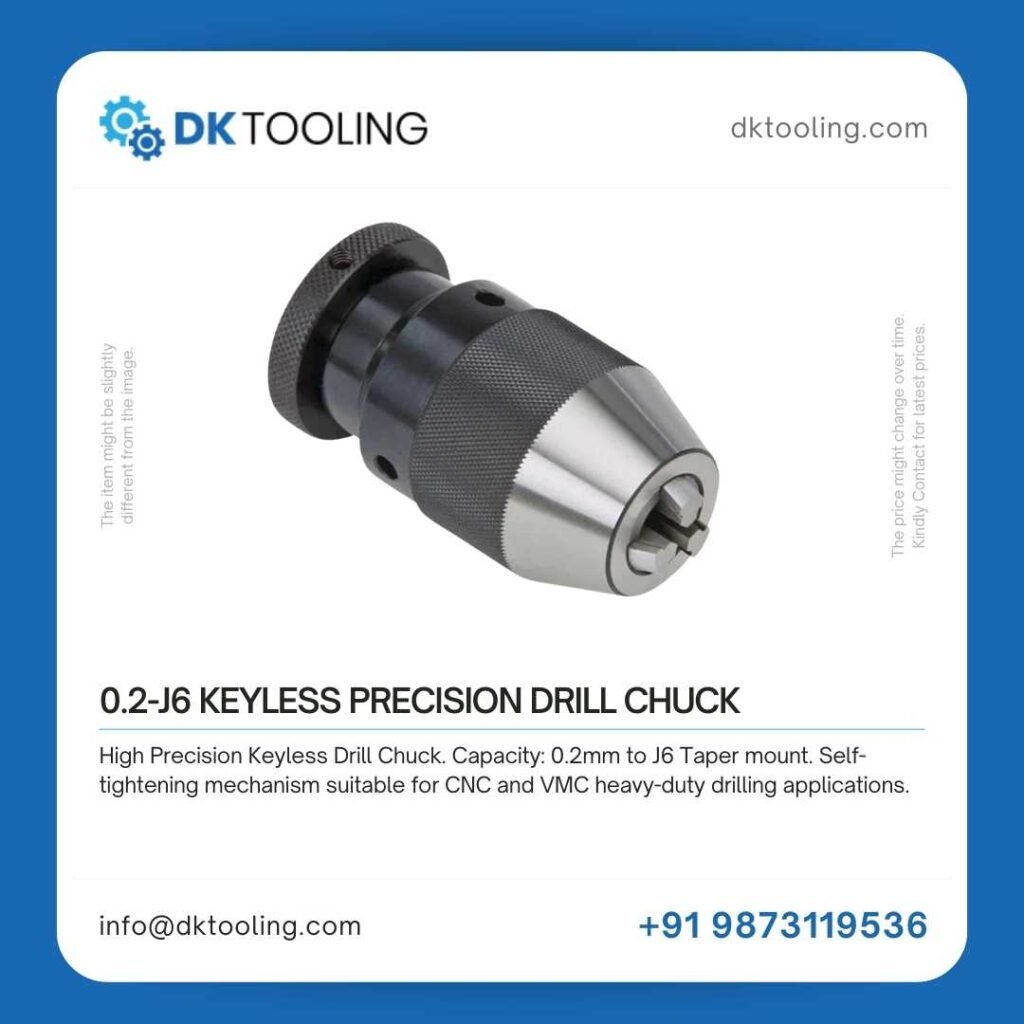
0.2-J6 KEYLESS PRECISION DRILL CHUCK
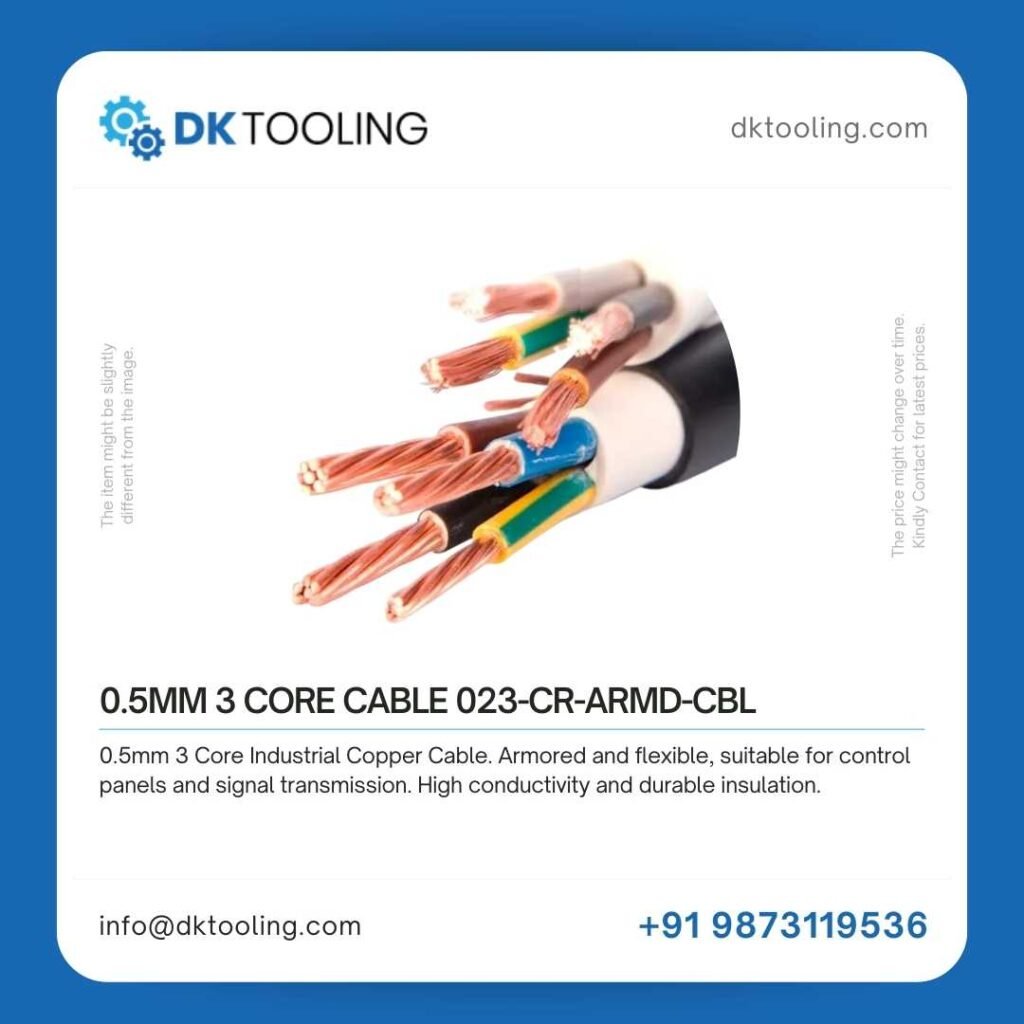
Original price was: ₹9,150.00.₹8,050.00Current price is: ₹8,050.00.0.5MM 3 CORE CABLE 023-CR-ARMD-CBL
Original price was: ₹39.00.₹33.00Current price is: ₹33.00.045 REYNOLDS PEN
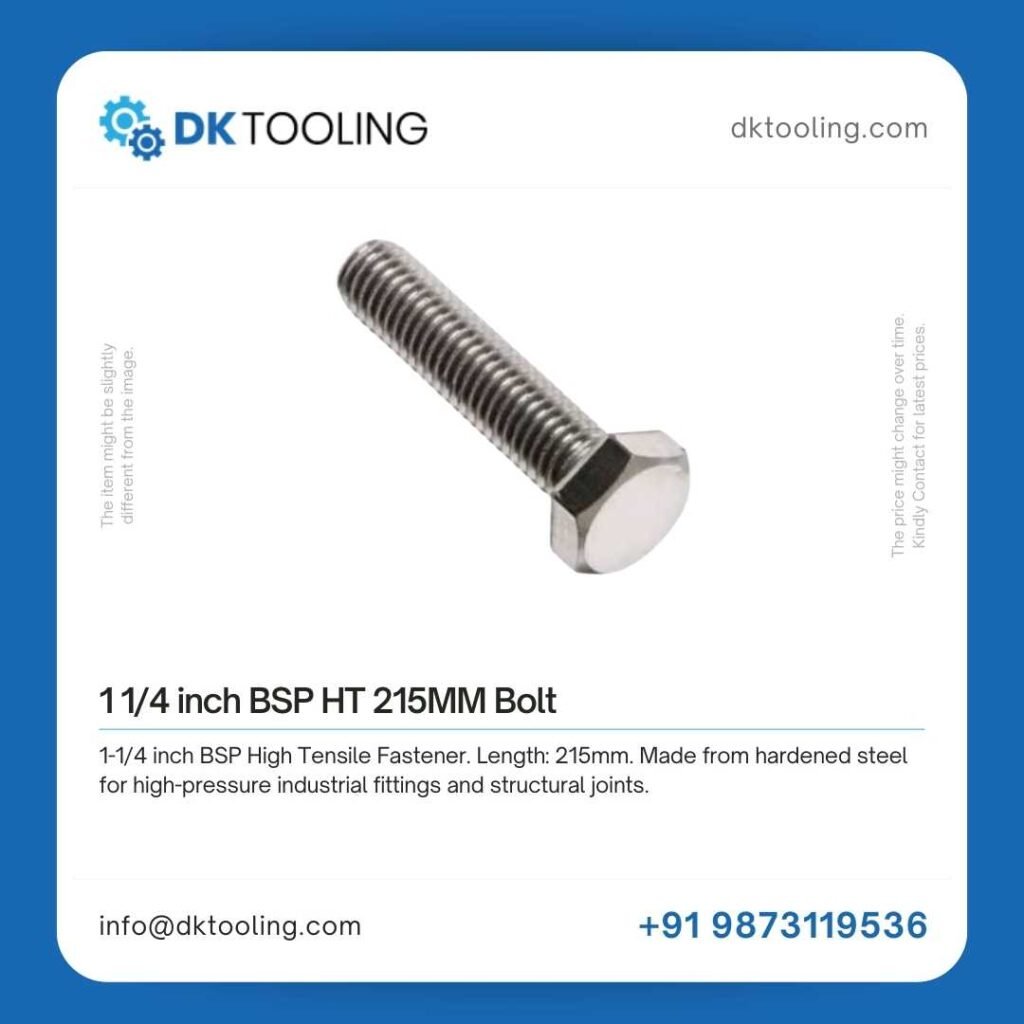
Original price was: ₹13.00.₹11.00Current price is: ₹11.00.1 1/4 inch BSP HT 215MM Bolt
Original price was: ₹650.00.₹550.00Current price is: ₹550.00.1 GOLD (3 YEAR DESKTOP) ANTIVIRUS
Original price was: ₹7,800.00.₹6,600.00Current price is: ₹6,600.00.


COMPARISON TABLE: SUPPLIER EVALUATION FRAMEWORK
| Feature | Basic Supplier | Certified Supplier | Strategic Partner |
|---|---|---|---|
| ISO 9001 Certification | ❌ Not certified | ✅ Certified | ✅ Certified + sector-specific |
| Technical Support | Limited phone/email | Dedicated application engineers | On-site process optimisation |
| Inventory Visibility | No real-time data | 24/7 online portal | API integration with ERP |
| Domestic Stocking | Minimal | Key items stocked | Full range + safety stock |
| Typical Lead Time | 15–25 days | 5–10 days | 1–5 days (expedite available) |
| Quality Documentation | Certificate of conformance | Full traceability + COC | Statistical process control data |
| Warranty Coverage | 30 days | 12 months | Extended coverage + performance guarantees |
| Pricing Model | Transactional | Volume discounts | Consignment / VMI |
| Annual Spend Typical | <$10k | $10k–100k | $100k+ |
| ROI Contribution | Minimal | Moderate | Significant (documented) |
ROI ANALYSIS: QUALITY TOOLING INVESTMENT
Why Low-Cost Tooling Rarely Saves Money
Purchasing decisions based solely on purchase price ignore four critical cost drivers.
Increased changeover time. Low-quality cutting tools wear faster. Each tool change stops production. For a machining centre running at $200 per hour in burdened labour and overhead, every extra tool change adds direct cost.
Higher scrap rates. Dull or poorly ground tools produce out-of-tolerance parts. Scrap represents wasted material, labour, and machine time.
Machine damage. Broken tooling damages spindles, fixtures, and workpieces. A single spindle replacement can cost $15,000–40,000 plus days of downtime.
Inconsistent cycle times. Tools that don’t perform predictably force operators to slow feeds or add finishing passes, reducing throughput.
Realistic ROI Example
A mid-sized precision machining facility (15 CNC machines) switched to premium carbide tooling from a lower-cost supplier.
| Metric | Before | After | Improvement |
|---|---|---|---|
| Average tool life | 45 minutes | 75 minutes | +67% |
| Tool changes per shift | 8 | 5 | -38% |
| Scrap rate | 3.2% | 1.8% | -44% |
| Annual tool spend | $42,000 | $51,000 | +21% (higher upfront) |
| Annual downtime cost (tool changes) | $38,400 | $24,000 | -$14,400 |
| Annual scrap savings | $67,200 | $37,800 | -$29,400 |
Net annual benefit: +$9,000 saved
ROI on higher-quality tooling: 178% in first year
The facility spent 21% more on tools but saved $43,800 in downtime and scrap. The payback period for the transition was under three months.

CASE STUDY: PRECISION ENGINEERING FACILITY TRANSFORMATION
Client: US-based aerospace components manufacturer, 85 employees, 22 CNC machines
Problem
The facility experienced chronic tooling reliability issues. Carbide end mills from their existing supplier averaged only 35 minutes of cutting life before edge chipping. Production planners kept 25% safety stock of critical tools, tying up $180,000 in inventory. Changeover downtime averaged 4.2 hours per week across the machine shop.
Solution
DK Tooling conducted a full process audit, identifying three root causes: incorrect coating selection for the primary alloys (Inconel 718 and titanium 6Al-4V), suboptimal flute geometry for the machine spindle speeds, and inconsistent edge preparation from the existing supplier.
New tooling specifications were developed: AlTiN+Si coating, variable helix geometry, and honed edge preparation. A consignment inventory programme was implemented for 42 high-volume SKUs.
Implementation
- Week 1–2: Validation trials on three machines
- Week 3–4: Full rollout across all 22 CNC machines
- Week 5–8: Operator training and process optimisation
- Week 9+: Ongoing performance monitoring
Results (12-month measurement period)
- Tool life increased from 35 minutes to 82 minutes average (+134%)
- Changeover downtime reduced from 4.2 hours/week to 1.8 hours/week (-57%)
- Scrap rate decreased from 2.9% to 1.4% (-52%)
- Consignment inventory reduced stock holding from $180,000 to $72,000 (-60%)
- Annual tooling spend decreased 8% despite higher-quality products (volume consolidation)
Lessons Learned
Investment in application engineering before purchasing paid for itself within six weeks. The manufacturer now involves DK Tooling in new product introductions at the design stage, preventing costly process issues downstream.
INDUSTRIAL PROCUREMENT TRENDS 2026–2028
Digital Procurement Acceleration
B2B ecommerce reached $2.93 trillion in 2025, with digital channels now influencing the majority of the industrial buying process. Buyers expect real-time pricing, inventory visibility, and self-service ordering — the same experience they receive in consumer ecommerce.
For manufacturing equipment suppliers, this means investing in platforms that integrate with buyer ERP systems and provide API access for automated purchasing.
AI in Maintenance and Procurement
Fifty-eight per cent of industrial teams are already using AI in operations, with 75% reporting measurable ROI within six months. Predictive maintenance applications are reducing unplanned downtime, while AI-powered procurement tools are optimising reorder points and supplier selection.
The US AI in predictive maintenance market is expected to increase from USD 3.5 billion in 2026 to USD 8.5 billion by 2031.
Reshoring and Supply Chain Regionalisation
The 2026 Kearney Reshoring Index confirms that tariffs have reshaped sourcing patterns, with 33% of respondents developing nearshoring or onshoring plans. Nearly all executives surveyed (98%) say they are actively preparing for supply chain localisation or reshoring.
Domestic manufacturing equipment suppliers that maintain US stock and offer technical support are positioned to capture significant market share as companies reduce reliance on overseas supply chains.
Sustainability Requirements
Industrial buyers increasingly require suppliers to document carbon footprint, recycling programmes, and waste reduction. For tooling suppliers, this includes take-back programmes for used carbide inserts and PCD tools.
EXPERT INSIGHTS
Rosemary Coates, Executive Director, Reshoring Institute:
“What we are seeing from our clients is a movement away from China and into other Asian countries and Mexico. The bigger story is that companies are considering the global landscape and choosing multiple places to source and manufacture. This new way of thinking mitigates the risks of regionalised disasters and geopolitics.”
Susan Spence, Chair, ISM Manufacturing Business Survey Committee:
Following the March 2026 PMI release, Spence noted that 64% of panelist comments were negative, with approximately 20% citing tariffs and 40% the Middle East conflict. The message for procurement: supplier diversification and domestic inventory are now strategic imperatives, not optional contingencies
FREQUENTLY ASKING QUESTIONS
Q1: How do I verify a manufacturing equipment supplier’s quality certifications?
Request current ISO 9001:2015 certificate with scope of registration. For aerospace applications, require AS9100. For medical device manufacturing, expect ISO 13485. Certified suppliers maintain documented quality management systems, undergo regular third-party audits, and can provide audit reports upon request. A supplier without valid certification cannot demonstrate consistent process control.
Q2: What is the typical lead time for custom tooling?
Standard custom tooling (modified standard geometries, special coatings) typically requires 15–25 working days from approved drawing. Complex custom tools (special forms, PCD-tipped, multi-diameter) may require 4–6 weeks. Reputable suppliers provide written lead-time confirmation at quotation stage and proactively communicate any delays. Domestic manufacturers often offer shorter lead times than overseas sources.
Q3: How can I reduce tooling costs without sacrificing quality?
Focus on total cost of ownership rather than purchase price. Consolidate purchases with fewer suppliers to qualify for volume pricing. Implement tool management systems to track consumption and identify waste. Standardise tooling across similar machines to reduce inventory SKUs. Evaluate regrinding services for carbide end mills and drills. The most cost-effective approach is rarely the lowest-priced supplier.
Q4: What certifications should I look for in cutting tools?
For general machining, ISO 9001-certified supplier with documented quality control is the minimum requirement. For aerospace, AS9100 and Nadcap accreditation may be required. For defence applications, ITAR compliance is mandatory. Additionally, look for tools manufactured to DIN, ISO, or ANSI standards, with full material certification available. Coating certificates verifying thickness, adhesion, and composition are valuable for critical applications.
Q5: How does predictive maintenance relate to tooling selection?
Predictive maintenance uses sensor data to predict equipment failures before they occur. Quality tooling supports predictive maintenance in three ways: consistent tool life enables predictable changeover scheduling, reduced tool breakage prevents unplanned machine stops, and stable cutting forces generate reliable vibration data. Low-quality tooling introduces randomness that undermines predictive systems.
Q6: What is the minimum order quantity for industrial tooling?
Minimum order quantities vary significantly. Standard catalogue items typically have no minimum or MOQ of 1–10 pieces. Custom tooling usually requires minimum quantities of 10–50 pieces depending on complexity. Some suppliers offer sample quantities for evaluation at reduced pricing. Ask about sample programmes before committing to production quantities.
Q7: How do I handle defective or non-conforming tooling?
Reputable suppliers provide clear warranty and return policies. Document the issue with photographs, measurements, and production data. Request replacement or credit. If problems persist, request a root cause analysis. A serious supplier treats quality issues as opportunities to improve processes, not as customer complaints to deflect.
Q8: Can you provide consignment or VMI (Vendor Managed Inventory)?
Many industrial suppliers offer consignment programmes for high-volume customers. Under consignment, the supplier stocks inventory at your facility and bills only when items are consumed. VMI arrangements give the supplier visibility into your consumption data to manage replenishment automatically. Both models reduce your inventory holding costs and prevent stockouts.
Q9: What is the typical warranty period for industrial cutting tools?
Standard catalogue tools typically carry a 30-day warranty against manufacturing defects. Premium and custom tools may carry 90-day or 12-month warranties. Read warranty terms carefully — many exclude wear-related failure, improper application, or incorrect speeds and feeds. A supplier that stands behind product quality will have reasonable warranty provisions.
Q10: How do tariffs affect tooling pricing in 2026?
Tariffs continue to impact imported tooling, particularly from China and certain other countries. Domestic manufacturers and suppliers with diversified sourcing are better positioned to maintain stable pricing. Many buyers are shifting to domestic or nearshore suppliers to reduce tariff exposure and lead time uncertainty. Request current pricing with tariff breakdown before ordering.
CONCLUSION
Choosing the right manufacturing equipment supplier is not a commodity purchasing decision. It directly affects your production uptime, product quality, and operational costs.
The US manufacturing expansion of 2026 creates opportunities — but only for facilities that have reliable supply partners. Reshoring investments exceeding $200 billion are bringing production back to American factories, and those factories need tooling that performs predictably, day after day.
Whether you operate a five-machine job shop or a hundred-machine production facility, the framework in this guide gives you a practical path forward: verify certifications, assess technical capability, evaluate total cost of ownership, and test before committing.
Your next step is straightforward. Start by requesting a consultation with our industrial specialists. We will review your current tooling, identify cost-saving opportunities, and provide sample tooling for validation — before you commit to production quantities.
Posts Widget
- 1

- 2
- 3
- 4





DKTooling Logo Inverse
DKTooling Private Limited
Welcome to DKTooling, your trusted partner in precision tooling and manufacturing solutions. With decades of experience in the industry, we specialize in providing high-quality, reliable tooling solutions for a wide range of sectors, including automotive, aerospace, medical, and consumer goods.
Copyright 2026 © DK Tooling Private Limited. All right reserved.
