

The Complete Industrial Guide to Cut Resistant Gloves: Levels, Materials & Buying Advice

A machine operator on the shop floor reaches to clear a metal offcut and feels a sharp sting—the cheap fabric glove has torn, and a gash now needs stitches. That single injury could have been avoided had the right cut resistant gloves been specified.
Across metal fabrication, glass handling, stamping, and food processing, hand injuries from sharp edges remain one of the most common workplace incidents. This guide cuts through the confusion around cut levels, materials, and standards, giving you the knowledge to select gloves that protect your team while keeping productivity high.
Table of Contents
1. Why Cut Resistant Gloves Matter in Industrial Work
Every day in sheet metal workshops, stamping units, glass factories, and food processing lines, workers handle materials sharp enough to slice through ordinary cotton or leather. A proper pair of cut resistant gloves does not eliminate all risk, but it significantly reduces the severity of lacerations caused by accidental contact with blades, burrs, or broken glass. For a factory manager or procurement buyer, investing in the right hand protection means fewer lost-time accidents, lower medical costs, and compliance with safety regulations like the Factories Act.
Yet many industrial buyers still treat gloves as a cheap commodity, ordering the lowest-priced option without checking the actual cut resistance rating. The result is a false sense of security. We have seen a ₹90 pair of unrated garden gloves being used next to a shear, which is a disaster waiting to happen. Understanding the technical difference between a level 3 and a level 5 glove, and matching that to the task, is the first step towards genuine workplace safety.
2. Understanding Cut Resistance Levels: ANSI and EN388 Explained
The cut resistance of a glove is measured under standardised test conditions. Two main standards dominate the global market: the European EN388 and the American ANSI/ISEA 105. Knowing how to read their ratings is essential when you compare cut resistant gloves from different suppliers.
- EN388:2016 uses a couptest (for low to medium cut hazards) and a TDM test (for high cut hazards). The couptest index grades from 1 to 5, where 5 indicates a high number of cycles before cut-through. However, if the blade blunts quickly during the couptest, a TDM test is required and the result is given as a letter (A to F), where F is the highest. So a glove marked EN388: 4X43E has a TDM cut resistance of level E, which is roughly equivalent to ANSI A5.
- ANSI/ISEA 105 uses a TDM-100 test and rates gloves from A1 (lowest) to A9 (highest), based on the gram force required to cut through the material. An A4 rating requires ≥1500 g, A5 ≥2200 g, A6 ≥3000 g, and A9 ≥6000 g. This scale is more granular and preferred by many Indian industrial buyers dealing with sharp metal parts.
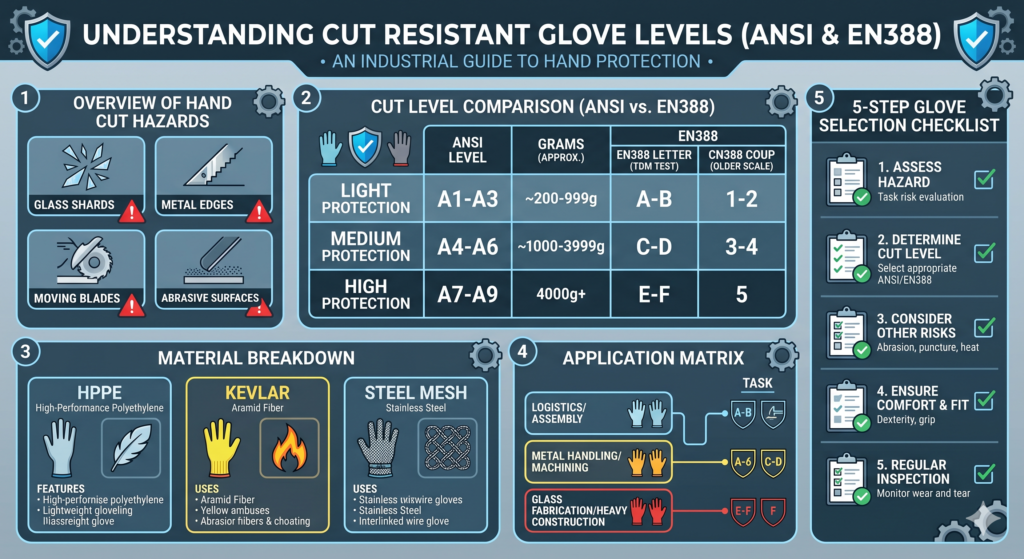
When you see terms like level 5 cut resistant gloves or a5 cut resistant gloves, always check which standard is being quoted. A reputable supplier will clearly state both ANSI and EN388 values on the glove or its packaging.
3. Materials That Make Gloves Cut Resistant
Cut resistance comes from the yarns and coatings used in the glove’s construction. Each material offers a different balance of protection, dexterity, and comfort.
- HPPE (High Performance Polyethylene): The most common engineered fibre for moderate cut protection. It offers good cut resistance (often up to ANSI A4–A5) with lightweight and breathable properties, often blended with glass fibre or steel wire for higher levels. HPPE gloves are the go-to for general metal handling and assembly work.
- Para-Aramid (Kevlar): Known for its excellent strength-to-weight ratio and heat resistance, Kevlar provides cut protection typically in the A3–A5 range. Kevlar cut resistant gloves resist sparks and moderate heat, making them suitable for welding, foundry, and hot metal handling.
- Steel Mesh: Made of interlocked stainless steel rings, these offer extremely high puncture and cut resistance. Steel mesh cut resistant gloves are the standard in meat processing and butchery, where sharp knives are constantly in use. They are also used in some metal stamping operations.
- Glass Fibre Blends: Often wrapped with HPPE or nylon, glass fibre increases cut resistance significantly without adding bulk, helping gloves reach ANSI A5–A7 levels.
- Nitrile or Polyurethane Coatings: These do not provide cut resistance but are applied as a palm coating to improve grip in oily or wet conditions. A nitrile coated cut resistant glove combines the cut-proof liner with a grippy, abrasion-resistant palm, ideal for handling oily metal sheets.
- Leather: While not inherently highly cut resistant, thick split leather can offer some mechanical protection and is often preferred for welding. Leather cut resistant gloves may incorporate an inner Kevlar liner for dual protection against heat and cuts.
4. Types of Industrial Cut Resistant Gloves (With Comparison Table)
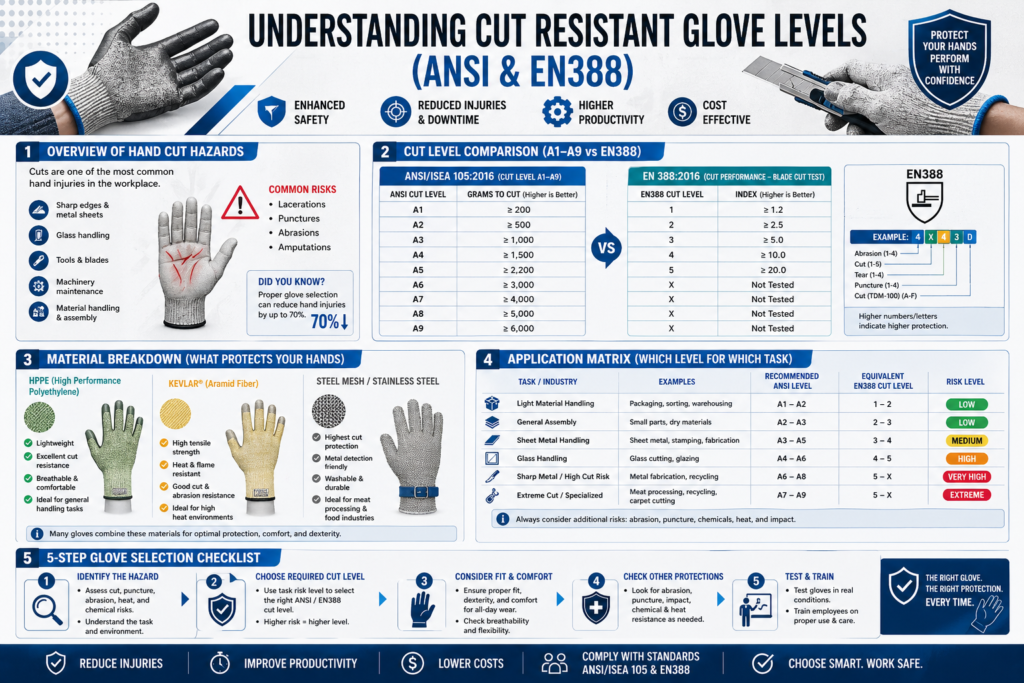
Here is a summary of common industrial glove types you’ll encounter, along with their typical applications and price ranges in India.
| Glove Type | Best Use Case | Material / Coating | Approx. Price Range (INR/pair) |
|---|---|---|---|
| Level 3 Lightweight HPPE | Assembly of small metal parts, inspection | HPPE liner, PU coated palm | ₹180 – ₹350 |
| Level 5 Nitrile Coated | Sheet metal handling, stamping press | HPPE/glass fibre, nitrile palm | ₹250 – ₹600 |
| Kevlar Heat-Resistant | Welding, foundry work, glass handling | 100% Kevlar or Kevlar blend | ₹400 – ₹900 |
| Steel Mesh Butcher Glove | Meat cutting, deboning | Stainless steel rings | ₹700 – ₹2,500 |
| Food Grade Cut Resistant | Food processing, kitchen prep | HPPE liner, food-safe coating | ₹300 – ₹800 |
| Heavy-Duty ANSI A6–A7 | Glass sheet handling, metal stamping | Glass fibre/HPPE, foam nitrile | ₹600 – ₹1,200 |
This table provides a quick reference. Note that prices for cut resistant gloves under ₹500 are readily available for Level 3 and some Level 5 types, especially when purchased in bulk packs. Always ask for a test certificate when placing large orders.
5. How to Choose the Right Glove for Your Application
Selecting work cut resistant gloves requires matching the hazard level, work environment, and compliance needs. Follow this four-step approach to narrow down your choices.
Step 1: Assess the Cut Hazard Severity
Walk the production line and note the sharpness and thickness of materials workers handle. A fine metal burr on a stamped part may require only ANSI A3, while sliding your hand along a sheet of 3 mm stainless steel might demand A5 or higher. Use the ANSI scale to select a minimum level, then step up one level to provide a safety buffer.
Step 2: Check Grip and Dexterity Requirements
If the task involves picking and inserting small fasteners, a thick, heavily coated glove will hinder productivity. A lightweight Level 3 gardening cut resistant gloves might be used for general site work, but on an assembly line you need a 13-gauge or 18-gauge fine liner with a thin PU coating. For mechanic cut resistant gloves, a snug fit and good tactile feedback are essential to handle nuts, bolts, and tools safely.
Step 3: Match the Environment
Wet or oily conditions call for a full nitrile palm dip. For food processing, the glove must be certified as food grade cut resistant gloves, meaning the polymer coating meets FDA or EU 1935/2004 standards. Butcher cut resistant gloves typically refer to the steel mesh variety worn over a cotton under-glove, often mandated in abattoirs. For welding cut resistant gloves, look for Kevlar stitching and a rating for contact heat alongside cut resistance.
Step 4: Fit and Size
A glove that is too large can catch on machinery; one that is too small causes fatigue. Measure hand circumference and length, and refer to the supplier’s sizing chart. Many cut resistant gloves india market suppliers offer sizes 7 to 11. Industrial bulk orders should include a sample size run for the actual operators, not just the supervisor.
Expert Quote: “Selecting the correct cut resistant glove improves not only safety but also operator confidence and efficiency. A worker who trusts their gloves will work faster and more accurately.” – A. Deshmukh, Industrial Safety Consultant
6. Common Pain Points and Practical Solutions
Procurement teams and safety officers frequently face these challenges when sourcing cut resistant gloves.
- Gloves that don’t last a full shift: Cheap gloves can wear out at the fingertips within hours of handling rough metal. Solution: upgrade to a glove with a reinforced thumb crotch or a heavier nitrile coating. A level 5 glove from a reputable brand like Karam or MaxiFlex can last two to three times longer than unbranded imports, reducing overall cost per day.
- Workers refuse to wear them because they’re too hot: In foundries or Indian summer conditions, thick gloves become unbearable. Switch to a Kevlar or HPPE glove with a knit back (uncoated) for breathability. Gloves with a dotted palm coating instead of a full dip also improve airflow.
- Confusion over cut level ratings: A buyer searching for cut resistant gloves level 5 may actually need ANSI A5, but the listing says “cut level 5” which could be the old EN388 couptest (which maps to only about ANSI A4). Always ask for the ANSI A-scale rating or the EN388 TDM letter.
- Colour preferences for identification: Many factories like to use colour coding for different areas. Black cut resistant gloves are popular in automotive workshops because they hide dirt, while grey cut resistant gloves or hi-vis orange may be used in specific zones. Check if the supplier offers the required colour without a long lead time.
- Finding stock locally or online: Searches for cut resistant gloves near me, cut resistant gloves nearby, or cut resistant gloves amazon often return thousands of results with inconsistent specifications. It’s safer to buy from an industrial supplier who provides datasheets, bulk pricing, and return/exchange support for sizing issues.
7. Recommended Cut Resistant Glove Products
Here are five high-demand products that cover a range of industrial applications.
Products by Tag
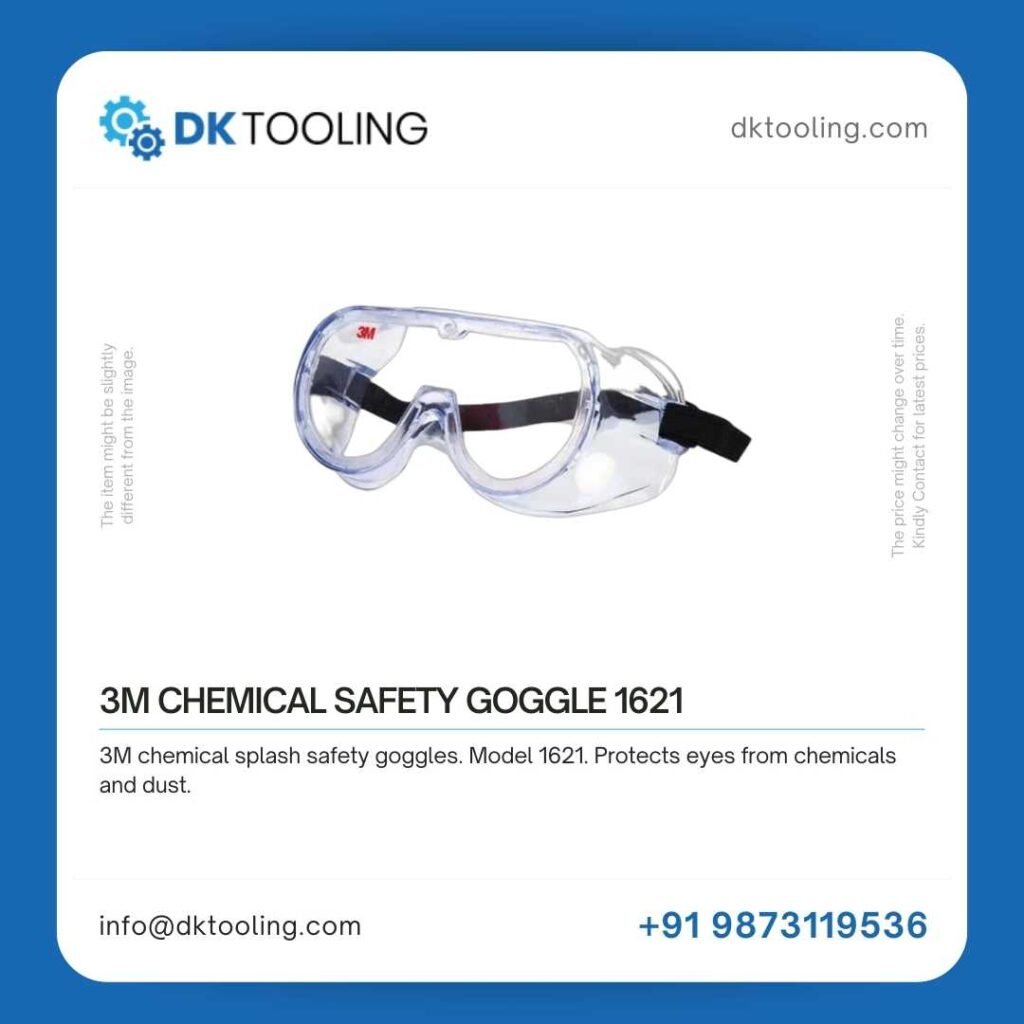
3M CHEMICAL SAFETY GOGGLE 1621
Original price was: ₹143.00.₹121.00Current price is: ₹121.00.
8. Related PPE and Accessories
Complete the hand protection system with these essential add-ons:
Products by Tag
3M CHEMICAL SAFETY GOGGLE 1621
Original price was: ₹143.00.₹121.00Current price is: ₹121.00.
9. Frequently Asked Questions
1. What does Level 5 cut resistant gloves actually mean?
Historically, “level 5” referred to the old EN388 couptest rating of 5, meaning the glove survived more than 20 cycles before cut-through. Under the revised EN388:2016, that same glove may now need a TDM test and be assigned a letter grade (for example, Level C or D) because the couptest blade blunts on high-performance fibres.
However, many Indian manufacturers still market gloves as level 5 cut resistant gloves by combining the couptest level 5 with an ANSI A4 or A5 rating. So when you are buying cut resistant hand gloves level 5, always ask the supplier to confirm the TDM cut force in grams or the ANSI A-scale number. A genuine ANSI A5 glove needs a minimum of 2,200 g to cut, which offers excellent protection for metal stamping and sheet handling.
2. Are cut resistant gloves also heat resistant?
Not all of them. Basic HPPE or HPPE/glass gloves usually melt at temperatures above 150°C, so they are not suitable for welding or foundry work. For heat and cut protection combined, choose Kevlar cut resistant gloves or a hybrid glove with a Kevlar outer and cotton lining.
Cut and heat resistant gloves will have both cut resistance (e.g., EN388 Level C) and a heat resistance rating (EN407) displaying the contact heat behaviour. For welders, a gauntlet style glove with Kevlar stitching and an aluminised back is ideal for reflecting radiant heat. Always check the manufacturer’s declared performance levels for both hazards before purchasing.
3. Can I use the same cut resistant glove for food processing and industrial work?
You can, but only if the glove is explicitly certified as food grade cut resistant gloves. Food-grade versions use coatings that comply with EU 1935/2004 or FDA CFR 21, meaning no harmful substances migrate to food. The liner material (HPPE, glass fibre) is the same, but the colour is often blue or high-vis to be detectable if a fragment breaks off.
Industrial gloves may use a black nitrile coating that contains carbon black not approved for food contact. For meat and poultry, steel mesh cut resistant gloves remain the standard, worn over a disposable glove. Do not use standard industrial gloves for food prep unless the specification sheet confirms food safety compliance.
4. How do I measure my hand for the correct glove size?
Measure around the dominant hand (usually right) at the knuckle circumference, excluding the thumb. In India, a medium (size 8) is common for men, while women often need size 7 or 8. For cut resistant gloves karamm or other brands, sizes typically run: Small (7), Medium (8), Large (9), XL (10), XXL (11).
If between sizes, choose the larger one when wearing liners or if working in cold conditions. A glove that is too snug restricts blood flow and increases fatigue, while a loose glove risks getting caught in rotating machinery. Always have operators try samples and record their preferred size before committing to bulk orders.
5. What is the difference between ANSI A4 and A6 cut resistant gloves?
ANSI A4 requires a minimum cut force of 1,500 g, while A6 requires 3,000 g—double the protection. In practical terms, an A4 glove is suitable for handling stamped metal parts with minor burrs, while an A6 glove can protect against contact with sheet metal edges under higher pressure.
A6 cut resistant gloves typically contain a high percentage of glass fibre and may be slightly stiffer. The cost also jumps: A6 gloves can be ₹600–₹1,200 per pair, whereas A4 gloves may be ₹250–₹500. Don’t over-specify; if your hazard assessment only requires A3, an A6 glove will just waste budget and reduce dexterity.
6. Can cut resistant gloves be washed and reused?
Most industrial cut resistant gloves with a nitrile or PU coating can be machine washed at 40°C and air dried. Washing removes oil and metallic dust that can degrade the fibres. However, avoid bleach and fabric softeners that damage the elastic properties. Gloves used in heavy metal fabrication may last weeks if washed regularly, but inspect them before each use.
Once the coating cracks, the liner shows through, or the cut zone is visibly worn, replace them. Some facilities buy cut resistant gloves on sale in bulk to keep replacement costs low. For food-grade gloves, frequent sanitisation is essential; many are designed for 5–10 wash cycles.
7. Where can I buy genuine cut resistant gloves at competitive prices in India?
You can find cut resistant gloves amazon and other online marketplaces, but beware of counterfeits claiming high cut levels without certification. For industrial bulk quantities, approach authorised distributors of brands like Karam, Mallcom, MaxiFlex, or ATG.
These distributors provide test reports, GST invoices, and consistent stock. Many also offer cut resistant gloves price lists valid for 30 days. A search for cut resistant gloves india will bring up major safety equipment portals where you can request a demo box. For urgent needs, cut resistant gloves near me will reveal local PPE stockists, but always verify the cut level marking on the glove itself.
8. Are there any special rules for using cut resistant gloves in a kitchen environment?
Yes. Kitchen cut resistant gloves must be food-safe and preferably high-visibility (blue) so that any fragment is easily spotted. Level 3 or A3 is usually sufficient for vegetable peeling and light chopping; for deboning and heavy butchering, use a steel mesh glove.
In some states, the FSSAI expects food handlers to wear chainmail gloves during meat cutting. Ensure the glove fits well and has a non-slip cuff. Always wear a disposable glove underneath to maintain hygiene. Remember that no glove is entirely cut-proof—they are cut resistant, and safe knife techniques must still be taught and enforced.
10. Conclusion and Next Steps
Hand injuries from cuts are preventable when you combine the right knowledge with quality cut resistant gloves. By understanding ANSI levels, material technologies, and the specific demands of your shop floor, you can create a safer, more productive workplace where operators feel protected and valued.
Posts Widget
- 1

- 2
- 3
- 4






DKTooling Logo Inverse
DKTooling Private Limited
Welcome to DKTooling, your trusted partner in precision tooling and manufacturing solutions. With decades of experience in the industry, we specialize in providing high-quality, reliable tooling solutions for a wide range of sectors, including automotive, aerospace, medical, and consumer goods.
Copyright 2026 © DK Tooling Private Limited. All right reserved.
