

Nuts and Bolt: The Best Guide to Industrial Fasteners for Assembly and Construction
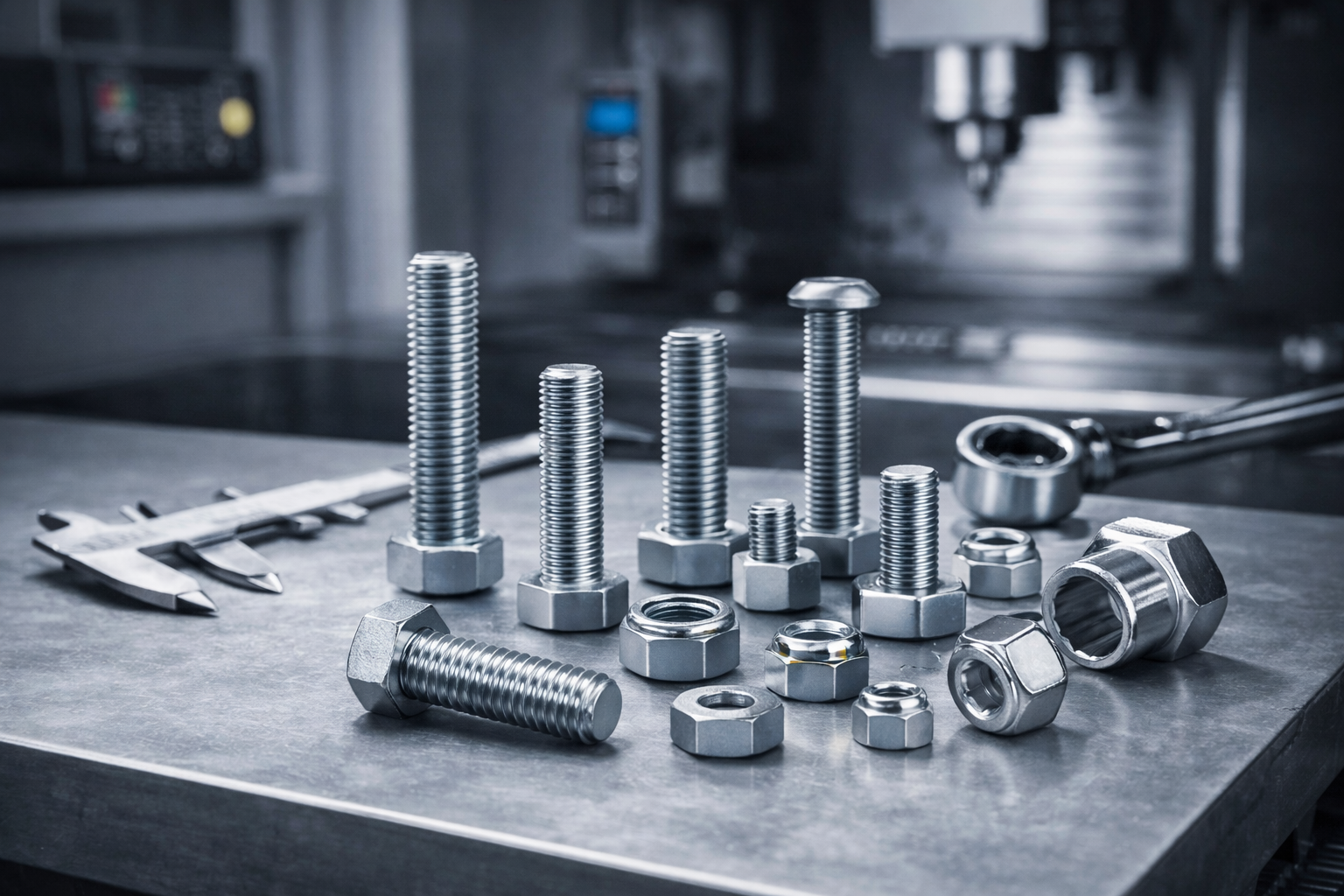
This guide provides a comprehensive overview of industrial nuts and bolt fasteners, tailored for the Indian market. Whether you are a procurement manager looking to buy nuts and bolt in bulk, an engineer needing to verify dimensions nuts and bolt for a design, or a maintenance technician searching for nuts and bolt nearby for a quick repair, this resource will equip you with the knowledge to make informed decisions. We will explore the various screws nuts and bolt combinations, the role of washers nuts and bolt assemblies, and how to interpret size nuts and bolt specifications. You will also find practical guidance on price nuts and bolt in Indian Rupees, where to find online nuts and bolt suppliers, and how to organise your inventory with effective nuts and bolt storage solutions.
Table of Contents
What Are Nuts and Bolts? Definition and Fundamental Principles
The nuts and bolts meaning in mechanical engineering refers to a pair of threaded fasteners designed to create a removable clamped joint. The bolt is an externally threaded fastener with a head on one end. It passes through clearance holes in the components being joined. The nut is an internally threaded fastener that is tightened onto the bolt’s protruding end. As the nut is turned, it advances along the bolt threads, drawing the bolt head and the nut together and compressing the joint members. This compression creates friction between the mating surfaces, which resists shear loads trying to slide the components apart.
The Mechanics of a Bolted Joint
When you tighten a nuts and bolt assembly, you are actually stretching the bolt elastically. This elastic elongation creates a tensile force called preload. The preload clamps the joint members together with significant force. For a properly designed and tightened joint, the external loads applied during service are borne primarily by the friction between the clamped members, not by the bolt itself in shear.
This is why proper torque is essential. Under-tightening reduces preload and clamping friction, allowing the joint to slip. Over-tightening can yield the bolt, permanently deforming it and reducing its clamping force. Understanding this fundamental principle is key to appreciating why dimensions bolts and nuts and material grades matter so much.
Permanent vs. Removable Joints
Unlike rivets or welding, nuts and bolt assemblies are designed to be removable. This is a crucial advantage in machinery, allowing for maintenance, repair, and replacement of components. The ability to disassemble a joint without destroying the fasteners makes nuts and bolt the preferred choice for most industrial assembly applications.
However, the removable nature also means that the joint can loosen over time due to vibration or thermal cycling. This is why various locking mechanisms—Nyloc nuts, lock washers, thread-locking compounds—are employed to ensure the bolts and nuts remain secure throughout the equipment’s service life.
Types of Bolts: Head Styles and Applications
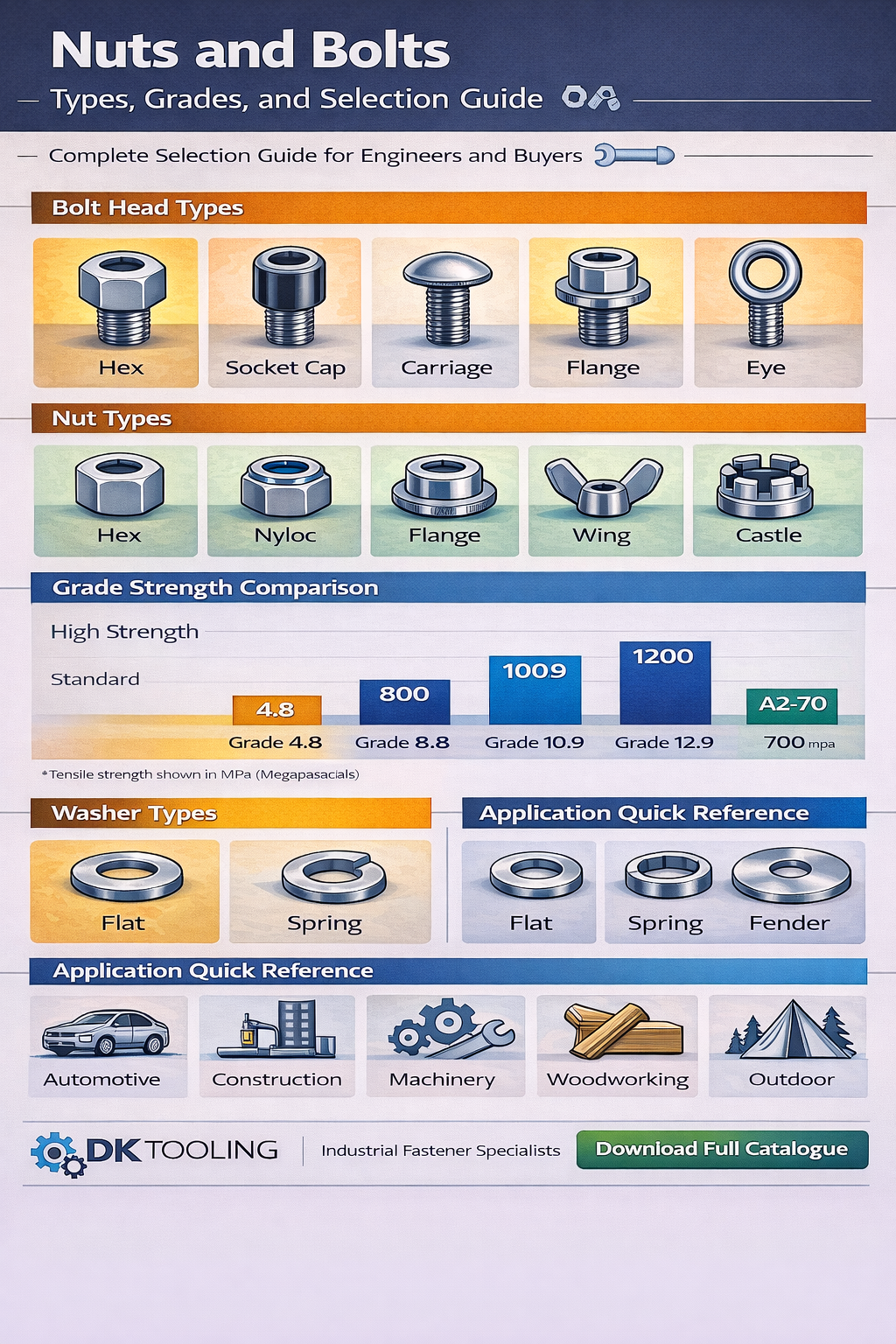
The bolt in a nuts and bolt pairing comes in numerous head styles, each suited to specific functional and spatial requirements. Selecting the correct head style is as important as selecting the correct size.
Hex Head Bolts
The hex head is the most common bolt type in industrial use. Its six-sided head provides a robust surface for spanners and sockets, allowing high torque to be applied. Hex head bolts are used in construction, machinery, automotive, and general fabrication. They are the workhorse of the bolts and nuts world.
Socket Head Cap Screws (Allen Bolts)
Commonly called Allen bolts, these feature a cylindrical head with an internal hexagonal drive socket. The compact head allows them to be recessed into counterbores, creating a flush or sub-flush assembly. They are ideal for applications where space is limited or where a clean, snag-free surface is required. Socket head screws are typically manufactured to higher strength grades, making them suitable for precision machinery and tooling.
Carriage Bolts
Carriage bolts have a smooth, domed head and a square neck section directly beneath the head. When driven into wood or a square hole in metal, the square neck prevents the bolt from turning as the nut is tightened. They are widely used in wood construction, furniture assembly, and fastening metal to wood. The smooth head provides a finished appearance and eliminates sharp edges.
Flange Bolts
Flange bolts incorporate a built-in washer-like flange under the head. This flange distributes the clamping load over a larger area, eliminating the need for a separate flat washer in many applications. The flange often has serrations that grip the mating surface, providing resistance to loosening.
Eye Bolts and U-Bolts
These are specialist nuts and bolt forms. Eye bolts have a looped head for attaching ropes, cables, or chains. U-bolts are U-shaped with threaded ends for securing pipes, tubes, or round bars to a flat surface. Both are essential in rigging, plumbing, and suspension applications.
Types of Nuts: From Standard Hex to Specialist Locking
The nut is the counterpart to the bolt in a bolts and nuts joint. The selection of nut type influences assembly speed, resistance to loosening, and load distribution.
Hex Nuts
The standard six-sided nut is the most common type. It is used with a matching hex bolt and tightened with a spanner or socket. Hex nuts are available in various thicknesses and finishes. They provide a reliable, cost-effective fastening solution for general applications.
Nyloc Nuts (Nylon Insert Lock Nuts)
Nyloc nuts feature a nylon insert at the top of the internal threads. As the nut is tightened onto the bolt, the bolt threads cut into the nylon, creating a prevailing torque that resists loosening from vibration. Nyloc nuts are essential in automotive, machinery, and any application subject to dynamic loads. They are sometimes called self-locking nuts.
Flange Nuts
Similar to flange bolts, flange nuts have a wide, integrated washer face. This distributes the clamping load and protects the mating surface. Serrated flange nuts have teeth on the bearing surface that bite into the material, providing excellent vibration resistance.
Wing Nuts
Wing nuts have two protruding “wings” that allow them to be tightened and loosened by hand without tools. They are used in applications requiring frequent adjustment or disassembly, such as fixtures, clamps, and access panels.
Castle Nuts and Slotted Nuts
Castle nuts have slots cut into one end. They are used with a bolt that has a hole drilled through its threaded end. After tightening, a cotter pin or split pin is inserted through the slots and the bolt hole, positively locking the nut in place. This is a critical safety feature in automotive suspension, aircraft control linkages, and other high-reliability applications.
Nuts and Bolt Materials and Grades: Carbon Steel, Stainless, Alloy
The performance of a nuts and bolt assembly is dictated by the material and its mechanical properties. The grade marking on the bolt head indicates its strength.
Carbon Steel Grades
Carbon steel is the most economical and widely used material for nuts and bolt. Common metric property classes include:
- Grade 4.6 / 4.8: Low strength, for light-duty, non-critical applications.
- Grade 8.8: Medium carbon steel, quenched and tempered. The standard for general engineering, structural connections, and machinery. This is the most common black bolts and nuts finish seen in industrial supply.
- Grade 10.9: Alloy steel, higher strength. Used in automotive, high-vibration, and demanding mechanical applications.
- Grade 12.9: Highest strength common grade. Used in critical engine components, high-stress structural joints, and applications where maximum clamping force is required.
Stainless Steel Grades
Stainless steel nuts and bolt provide inherent corrosion resistance without requiring plating. They are essential for food processing, marine, chemical, and outdoor applications. Common grades are A2 (304 stainless) for general corrosion resistance and A4 (316 stainless) for enhanced resistance to chlorides and harsh chemicals.
Brass and Other Materials
Brass nuts and bolt are used for decorative purposes, electrical conductivity, and corrosion resistance in plumbing and marine applications. They are non-magnetic and have a distinctive golden appearance.
Understanding Nuts and Bolt Sizes: Metric and Imperial Dimensions
Specifying the correct size nuts and bolt is fundamental to successful assembly. In India, the metric system is the standard, but imperial sizes are encountered on imported or legacy equipment.
Metric Sizes
Metric bolts are designated by the letter “M” followed by the nominal diameter in millimetres. For example, an M10 bolt has a 10mm diameter. The length is measured from under the head to the end of the thread. Thread pitch, the distance between adjacent thread crests, is also important. Coarse pitch is the standard default (e.g., M10 x 1.5). Fine pitch threads (e.g., M10 x 1.25) are used in specialised applications.
Imperial Sizes
Imperial bolts are designated by the diameter in inches and the number of threads per inch (TPI). Common standards include UNC (Unified National Coarse) and UNF (Unified National Fine). When ordering nuts and bolt for American or British machinery, precise imperial specifications are required.
Measuring Nuts and Bolt Dimensions
To identify an existing nuts and bolt, measure the bolt diameter with a vernier caliper. Measure the thread pitch using a thread pitch gauge. Measure the length from under the head. Refer to a dimensions nuts and bolt chart to confirm the standard. When you buy nuts and bolt, having these measurements ensures you receive the correct replacement.
Washers and Their Critical Role in Nuts and Bolt Assemblies
Washers are thin, disc-shaped plates with a hole. Though simple, they perform vital functions in a nuts and bolt joint. A complete fastening solution often includes washers nuts and bolt together.
Flat Washers
Flat washers are placed under the bolt head or the nut. They distribute the clamping load over a larger area, preventing the bolt head or nut from embedding into the surface of the material being clamped. This is especially important when fastening into soft materials like aluminium or wood.
Spring Washers (Split Lock Washers)
Spring washers are split and formed into a helical shape. As the nut is tightened, the washer flattens, creating a spring force that maintains tension on the bolt threads. While their effectiveness is debated in some engineering circles, they remain widely used to provide a degree of resistance to vibrational loosening in non-critical applications.
Fender Washers
Fender washers have a much larger outer diameter relative to the hole size. They are used to distribute load over a very wide area, ideal for thin sheet metal, plastic panels, and automotive bodywork.
Nuts and Bolt Selection Guide by Application with INR Price Table
Selecting the optimal nuts and bolt requires balancing mechanical demands with budget constraints. The table below provides a practical reference for common applications in the Indian market.
Mandatory Table: Nuts and Bolt Selection Guide with INR Pricing
| Application | Recommended Bolt Type | Material Grade | Finish | Approx. Size Range | Indicative INR Price (Per 100 pcs) |
|---|---|---|---|---|---|
| General Fabrication (Indoor) | Hex Head Bolt & Hex Nut | 8.8 | Zinc Clear | M6 – M12 x 20-50mm | ₹300 – ₹1,200 |
| Automotive Components | Flange Bolt & Flange Nut | 10.9 | Black Oxide / Zinc | M8 – M14 | ₹800 – ₹2,500 |
| Wood Construction / Furniture | Carriage Bolt & Hex Nut | 4.8 | Zinc Clear | M6 – M10 x 40-80mm | ₹400 – ₹1,500 |
| Precision Machinery | Socket Head Cap Screw | 12.9 | Black Oxide | M3 – M8 x 10-30mm | ₹500 – ₹2,000 |
| Outdoor / Corrosive Environment | Hex Head Bolt & Nyloc Nut | A2 Stainless | Plain | M6 – M12 | ₹1,500 – ₹4,000 |
| Plumbing / Decorative | Brass Machine Screw & Hex Nut | Brass | Plain / Nickel | M3 – M6 | ₹600 – ₹1,800 |
| Heavy Structural Steel | Heavy Hex Bolt & Heavy Hex Nut | 10.9 | Hot Dip Galvanised | M16 – M24 | ₹3,000 – ₹8,000 |
| Small Electronics / Hobby | Small Screws & Nuts | 4.8 / Brass | Zinc / Plain | M2 – M4 | ₹150 – ₹500 |
Note: Prices are indicative for price nuts and bolt in standard lengths. For online nuts and bolt purchases, nuts and bolt sale events, or specific brand nuts and bolt requests like Unbrako or TVS, contact DK Tooling for current INR quotations. For nuts and bolt under 1500, consider our assortment kits detailed below.
“Selecting the correct industrial tool improves efficiency, safety, and machine lifespan. The same principle applies absolutely to bolts and nuts. I have seen an entire production line halted because a maintenance technician replaced a high-tensile 12.9 bolt with a standard 8.8 bolt from the nearest hardware store. The bolt stretched under load, the joint loosened, and the resulting damage cost lakhs of rupees in repairs and lost output. Never compromise on fastener grade.”
— Senior Plant Engineer, Indian Heavy Engineering Sector
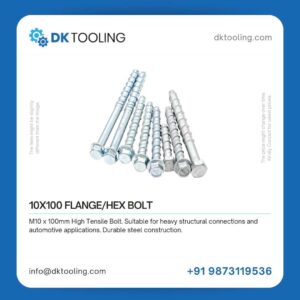
Understanding nuts and bolt fundamentals is essential for any industrial operation. For a broader perspective on equipment and tooling, explore our Complete Guide to Industrial Tools . When specifying fasteners for new projects or machinery purchases, our Industrial Tools & Equipment Buying Guide offers frameworks for evaluating total cost and performance. For insights into the Indian manufacturing ecosystem, read our analysis of Top 10 Industrial Tools Manufacturing Companies in India .
FAQs
1. What is the meaning of “nuts and bolts” in engineering?
The nuts and bolts meaning in engineering refers to a pair of mechanical fasteners used to create a clamped, removable joint. The bolt is an externally threaded pin with a head, inserted through clearance holes in the components to be joined. The nut is an internally threaded component that is turned onto the bolt’s protruding threads.
Tightening the nut creates a tensile preload in the bolt, which clamps the joint members together. The friction generated by this clamping force is what primarily resists shear loads. Beyond the literal definition, getting down to the nuts and bolts of a problem means focusing on the essential, practical details.
2. How do I determine the correct size nuts and bolt for my project?
To find the correct size nuts and bolt, you need to measure three key dimensions. First, measure the major diameter of the bolt’s threaded portion using a vernier caliper. This gives you the nominal size (e.g., 10mm for an M10 bolt). Second, measure the thread pitch using a thread pitch gauge to determine if it is coarse (standard) or fine thread.
Third, measure the bolt length from directly under the head to the end of the shank. For the nut, you only need the diameter and thread pitch to match the bolt. Always refer to a dimensions nuts and bolt chart if you are uncertain. When you buy nuts and bolt, providing these three measurements ensures you receive a compatible replacement.
3. What is the difference between a Grade 8.8 and Grade 10.9 bolt?
The grade marking on a bolt head indicates its mechanical strength. For a Grade 8.8 bolt, the first number (8) multiplied by 100 gives the nominal tensile strength in megapascals (800 MPa). The second number (8) indicates that the yield strength is 80% of the tensile strength (640 MPa). Grade 8.8 bolts are medium carbon steel and are suitable for most general engineering and structural applications. Grade 10.9 bolts have a tensile strength of 1000 MPa and a yield strength of 900 MPa (90% of tensile).
They are manufactured from alloy steel and heat-treated for higher strength. Grade 10.9 bolts and nuts are required for automotive components, high-vibration machinery, and any application where joint loads are high. Using an 8.8 bolt where a 10.9 is specified will result in joint failure.
4. Where can I find a nuts and bolt shop near me in India?
Searching for nuts and bolt nearby or nuts and bolt shop near me will typically return local hardware stores and industrial supply shops in your city. Major industrial hubs like Pune, Mumbai, Chennai, Ludhiana, and Ahmedabad have dedicated fastener markets. However, for consistent quality, traceability, and competitive pricing, many businesses now prefer online nuts and bolt suppliers like DK Tooling.
Online platforms offer a wider selection of brand nuts and bolt (including Unbrako, TVS, Sundaram), provide GST invoices, and deliver directly to your facility anywhere in India. This eliminates the time spent searching for store nuts and bolt and ensures you receive certified products.
5. What are the best nuts and bolt for outdoor use?
For outdoor applications, corrosion resistance is the primary concern. Standard zinc-plated nuts and bolt will eventually rust when exposed to moisture and weather. The best choice is stainless steel. A2-70 stainless steel (304 grade) provides excellent resistance to atmospheric corrosion and is suitable for most outdoor applications, including architectural fittings, fencing, and general external use.
For coastal environments or areas with chemical exposure, A4-80 stainless steel (316 grade) is recommended due to its superior resistance to chlorides and salt spray. While black nuts and bolt with black oxide finish are aesthetically pleasing, they offer minimal corrosion protection unless coated or oiled.
6. How should I organise and store my nuts and bolt inventory?
Effective nuts and bolt storage saves time, reduces waste, and prevents frustration. The ideal solution is a compartmented organiser with clear labelling. Nuts and bolt organizer cabinets with small plastic drawers allow you to sort fasteners by diameter, length, and type. Label each drawer with the metric size (e.g., “M6 x 20 Hex Bolts”) and the grade. For larger quantities, use stackable bins. Keep fasteners in their original packaging or sealed containers to prevent contamination and corrosion.
An organised nuts and bolt set of commonly used sizes on a shadow board near workstations improves efficiency dramatically. When you online nuts and bolt shop, consider purchasing assortment kits that come pre-organised in durable cases.
7. Can I reuse nuts and bolt after disassembly?
Reusing nuts and bolt is a common practice, but it requires careful judgment. For non-critical, low-load applications, clean, undamaged fasteners can generally be reused. However, certain conditions mandate replacement. Never reuse bolts and nuts that show signs of thread damage, corrosion pitting, or stretching. Never reuse Nyloc nuts, as the nylon insert loses its locking ability after the first installation.
Critical applications, such as engine components, suspension parts, and structural connections, often specify that fasteners are “torque-to-yield” and must be replaced after a single use. Always consult the equipment manufacturer’s service manual. When in doubt, the price nuts and bolt for new replacements is insignificant compared to the cost of a fastener failure.
8. What is the difference between a bolt and a screw?
The distinction between a bolt and a screw lies primarily in how they are assembled. A bolt is designed to be used with a nut. It passes through clearance holes in the components being joined, and the nut is tightened on the opposite side. A screw is designed to be driven into a pre-tapped (threaded) hole or to form its own threads directly in the material (like a wood screw or self-tapping screw).
In common usage, screws nuts and bolt describes the complete family of threaded fasteners, but in technical specification, the intended method of assembly determines the correct designation.
Conclusion
Nuts and bolt fasteners are the foundational elements of mechanical assembly. Their reliability underpins the safety and performance of everything from household appliances to heavy industrial machinery. Understanding the nuts and bolts meaning, the various types of bolts and nuts available, the significance of material grades, and the correct method for measuring size nuts and bolt are essential skills for engineers, technicians, and procurement professionals.
A well-chosen nuts and bolt assembly, properly installed and torqued, will provide years of reliable service. A poorly chosen or improperly installed one invites failure, downtime, and potential safety hazards.
For Indian businesses, sourcing quality nuts and bolt from reputable suppliers ensures that your equipment and projects are built on a solid foundation. Whether you need a comprehensive nuts and bolt set for workshop use, specific black nuts and bolt for a machine tool, or corrosion-resistant washers nuts and bolt for an outdoor installation, making informed choices protects your investment.
DK Tooling offers a wide range of industrial fasteners with competitive INR pricing, pan-India delivery, and the technical support you need to select the right components.
Ready to secure your assemblies with premium fasteners? Contact DK Tooling today for a personalised quotation or download our complete catalogue for your records.
Posts Widget
-
1
-
2
-
3


dk-tooling-logo-horizontal-inverse
DK Tooling and Industrial Solution
Welcome to DK Tooling, your trusted partner in precision tooling and manufacturing solutions. With decades of experience in the industry, we specialize in providing high-quality, reliable tooling solutions for a wide range of sectors, including automotive, aerospace, medical, and consumer goods.
Copyright 2025 © Partdo WordPress Theme. All right reserved. Powered by KLBTheme.



You must be logged in to post a comment.