

Allen Bolt: The Industrial Buyer’s Best Guide to Socket Head Cap Screws
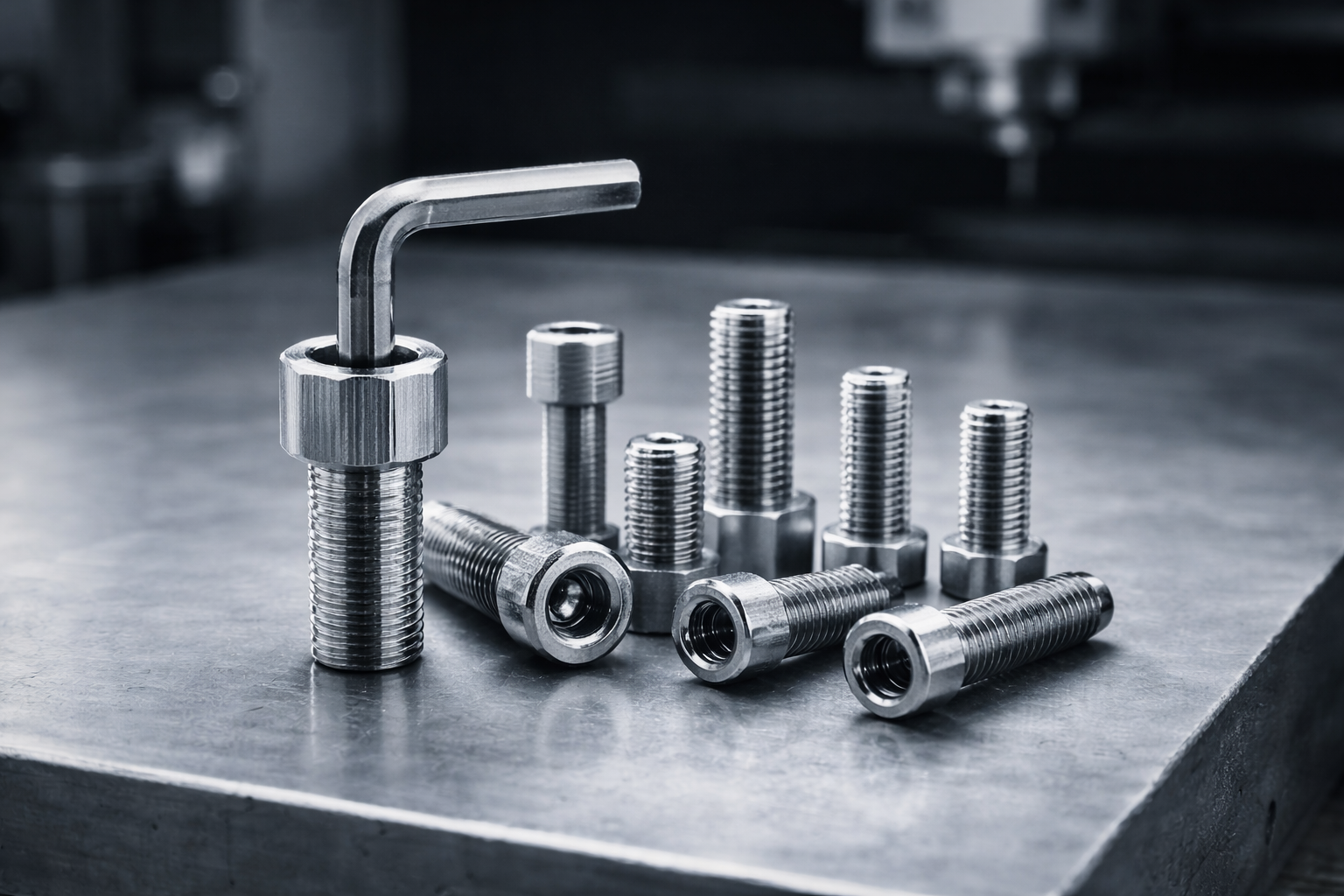
The humble Allen bolt is one of the most ubiquitous yet frequently misunderstood components in industrial assembly. Also known as a socket head cap screw, this fastener features a cylindrical head with a hexagonal recess designed to be driven by an Allen key or hex wrench. From automotive manufacturing lines in Chennai to heavy machinery assembly in Jamshedpur, the Allen bolt plays a critical role in creating strong, reliable, and space-efficient joints.
Despite its simple appearance, selecting the wrong grade, material, or thread specification can lead to catastrophic joint failure, equipment downtime, and significant financial loss. This guide provides industrial buyers, engineers, and maintenance professionals with a complete understanding of Allen bolt specifications, standards, and selection criteria.
You will learn how to navigate the complex landscape of fastener grades, material compatibility, and dimensional standards to ensure your assemblies perform reliably under real-world conditions.
Understanding the difference between an ISO 4762 and a DIN 912 specification, or why a 12.9 grade bolt is required instead of an 8.8 grade, is not merely academic. These decisions directly impact safety, warranty liability, and operational costs. This article demystifies the technical aspects of socket head cap screws and provides practical guidance for procurement decisions.
Whether you are ordering replacement fasteners for maintenance or specifying bolts for a new product design, the information contained here will help you make informed choices that balance performance and cost in the Indian industrial market.
Table of Contents
What Exactly Is an Allen Bolt? Understanding Socket Head Cap Screws
The term Allen bolt is a proprietary eponym, much like Xerox for photocopiers. It refers specifically to a socket head cap screw, a type of fastener with a cylindrical head and a hexagonal drive socket. The name derives from the Allen Manufacturing Company, which first commercialised the hex socket drive in the early twentieth century. Today, the term is used generically across the industrial supply chain to describe any bolt with an internal hexagonal drive recess.
The Anatomy of an Allen Bolt
An Allen bolt consists of several critical geometric features that distinguish it from other fastener types. The head is cylindrical with a flat or slightly domed top surface. The sides of the head are smooth, unlike hex head bolts which have external flats for a spanner. The drive recess is a hexagonal socket precisely broached into the head, designed to accept a corresponding hex key. The shank may be fully threaded or partially threaded, depending on the application requirements. Fully threaded bolts provide maximum grip length and are ideal for applications where the joint thickness varies. Partially threaded bolts have an unthreaded grip section beneath the head, which provides better shear strength and alignment in precision assemblies.
The geometry of the socket head provides several inherent advantages. The internal hex allows the bolt head to sit flush or below the surface of the mating component, creating a clean, snag-free assembly. The cylindrical head shape distributes clamping force evenly across the bearing surface, reducing the risk of galling or embedding in softer materials. For applications where space is constrained, such as inside machinery housings or on moving assemblies, the compact head design of an Allen bolt is often the only viable fastening solution.
Distinguishing Allen Bolts from Similar Fasteners
Industrial buyers must be precise in their terminology to avoid costly ordering errors. A button head socket screw has a lower profile, domed head and is designed for lighter clamping loads. A flat head socket screw features a countersunk head that sits flush with the surface of the workpiece. A socket set screw, often called a grub screw, has no head at all and is used to secure collars and pulleys to shafts. Each of these variations serves a specific purpose, but the standard socket head cap screw—the true Allen bolt—remains the workhorse of industrial fastening due to its high strength and versatility.
Why Allen Bolts Are Preferred in Industrial Applications
The widespread adoption of Allen bolts across manufacturing, automotive, aerospace, and general engineering sectors is not accidental. These fasteners offer a unique combination of mechanical advantages that make them superior to traditional hex head bolts in many applications. Understanding these advantages helps engineers and procurement professionals justify their specification in assembly designs.
High Strength-to-Size Ratio
Socket head cap screws are manufactured from high-strength alloy steels and are heat-treated to achieve exceptional tensile and yield strengths. A properly specified Allen bolt can typically achieve clamping loads significantly higher than a comparable hex head bolt of the same nominal diameter. This allows designers to use smaller, lighter fasteners without compromising joint integrity. In weight-sensitive applications such as automotive and aerospace manufacturing, this advantage translates directly into performance and efficiency gains. The internal wrenching feature also allows the bolt head to be smaller in diameter than an external hex head of equivalent strength, further reducing weight and material usage.
Accessibility in Confined Spaces
One of the most compelling reasons to specify Allen bolts is their ability to be installed and removed in locations where a spanner or socket simply cannot reach. The compact cylindrical head and the right-angle access provided by an Allen key allow fasteners to be placed deep within counterbores, close to walls, or between closely spaced components. This is particularly valuable in mould and die manufacturing, where fasteners must secure components within tight cavities. In machinery maintenance, the ability to access a Allen bolt without disassembling surrounding components can reduce downtime from hours to minutes.
Clean Aesthetic and Safety
Modern industrial equipment is increasingly designed with operator safety and aesthetic considerations in mind. The smooth, cylindrical head of an Allen bolt presents no sharp external corners that could catch clothing, cause injury, or accumulate debris. In food processing, pharmaceutical, and clean room environments, this smooth profile is essential for maintaining hygienic conditions. The recessed drive also remains clean and functional even after painting or coating operations, unlike external hex heads which can become clogged and difficult to engage.
Decoding Allen Bolt Grades: 8.8, 10.9, 12.9 and Stainless Steel
The performance of an Allen bolt is fundamentally determined by its material grade. The grade designation indicates the mechanical properties of the fastener, specifically its tensile strength and yield strength. Selecting the wrong grade is one of the most common and dangerous mistakes made in industrial fastening.
Metric Property Classes Explained
Metric Allen bolts are classified according to property classes defined in international standards. The most common property classes are 8.8, 10.9, and 12.9. The designation system is logical: the first number represents one-hundredth of the nominal tensile strength in megapascals (MPa), and the second number represents the ratio of yield strength to tensile strength.
Grade 8.8 Allen Bolts
A grade 8.8 bolt has a nominal tensile strength of 800 MPa and a yield strength of 640 MPa (800 × 0.8). These bolts are typically manufactured from medium carbon steel that has been quenched and tempered. Grade 8.8 fasteners are suitable for general engineering applications where high strength is not the primary requirement. They offer a good balance of strength, ductility, and cost. For many non-critical assemblies in agricultural equipment, material handling systems, and general fabrication, grade 8.8 Allen bolts provide adequate performance at an economical INR price point.
Grade 10.9 Allen Bolts
Grade 10.9 bolts offer tensile strength of 1000 MPa and yield strength of 900 MPa. These fasteners are manufactured from alloy steels that have been heat-treated to achieve superior mechanical properties. Grade 10.9 is the standard specification for most automotive and heavy engineering applications. The increased strength allows for higher clamping loads and better resistance to loosening under vibration. When replacing fasteners in critical assemblies such as engine mounts, suspension components, or hydraulic systems, grade 10.9 Allen bolts should be the minimum specification considered.
Grade 12.9 Allen Bolts
The highest common property class, grade 12.9, provides tensile strength of 1200 MPa and yield strength of 1080 MPa. These bolts are manufactured from high-quality alloy steels and undergo precise heat treatment processes to achieve maximum strength. Grade 12.9 fasteners are essential in high-stress applications such as cylinder head bolts, connecting rod bolts, and heavy machinery structural joints. However, this extreme strength comes with reduced ductility, making grade 12.9 bolts more susceptible to hydrogen embrittlement and stress corrosion cracking. They should be specified only when the application demands their capabilities.
Stainless Steel Allen Bolt Grades
Stainless steel Allen bolts are designated differently, typically using the A2 and A4 classifications under ISO 3506.
A2 Stainless Steel (18-8 / 304 Grade)
A2 stainless is the most common stainless fastener material. It offers excellent corrosion resistance in most atmospheric, freshwater, and mild chemical environments. The tensile strength of A2-70 fasteners is approximately 700 MPa, placing them between grade 8.8 and 10.9 carbon steel bolts in terms of strength. A2 stainless Allen bolts are widely used in food processing equipment, marine applications (above the waterline), architectural installations, and general outdoor use.
A4 Stainless Steel (316 Grade)
A4 stainless contains molybdenum, which significantly enhances resistance to pitting and crevice corrosion in chloride-rich environments. A4-70 and A4-80 fasteners are specified for marine immersion, chemical processing, and coastal construction where exposure to salt spray is continuous. The cost premium for A4 stainless Allen bolts is justified by their extended service life in aggressive environments.
Material Selection Guide: Carbon Steel, Alloy Steel, and Stainless
Beyond the grade designation, the base material of an Allen bolt influences its suitability for specific environments and applications. A systematic approach to material selection prevents premature failure and ensures long-term reliability.
Carbon Steel Allen Bolts
Carbon steel is the most economical material for Allen bolts. Fasteners manufactured from carbon steel are typically zinc-plated for corrosion protection. Common plating specifications include zinc clear (blue-bright), zinc yellow, and zinc black. Zinc plating provides sacrificial protection, corroding preferentially to protect the underlying steel. Carbon steel bolts are suitable for indoor applications, protected environments, and assemblies where periodic inspection and replacement are feasible. In the Indian market, carbon steel Allen bolts with zinc plating represent the most cost-effective solution for general fastening requirements.
Limitations of Carbon Steel
Carbon steel fasteners should not be used in outdoor applications without additional protection. Even zinc plating will eventually be consumed in humid or coastal environments, leading to rust formation. Hydrogen embrittlement is also a concern for high-strength carbon steel bolts that have been electroplated. Proper baking after plating is essential to drive out absorbed hydrogen and prevent delayed brittle failure.
Alloy Steel Allen Bolts
Alloy steel Allen bolts incorporate elements such as chromium, molybdenum, and vanadium to enhance mechanical properties. These fasteners are heat-treated to achieve the higher strength levels of grades 10.9 and 12.9. Alloy steel bolts are typically supplied with a black oxide finish, which provides minimal corrosion resistance but reduces friction and improves appearance. For applications requiring both high strength and corrosion resistance, alloy steel bolts can be plated with zinc or other protective coatings, though the risk of hydrogen embrittlement must be managed.
Applications for Alloy Steel
Alloy steel Allen bolts are the standard choice for powertrain components, high-pressure fluid systems, and structural joints in heavy machinery. The combination of high strength and good fatigue resistance makes them essential for dynamic applications where loads vary over time.
Stainless Steel Allen Bolts
As discussed in the grades section, stainless steel offers inherent corrosion resistance without the need for plating. The choice between A2 and A4 grades depends on the severity of the corrosive environment. Stainless Allen bolts are non-magnetic in their annealed state, though cold working during thread rolling can induce slight magnetism.
Considerations for Stainless Fasteners
Stainless steel has a higher coefficient of thermal expansion than carbon steel. In applications involving wide temperature fluctuations, this can affect joint preload. Stainless fasteners are also more susceptible to galling and seizing during installation. The use of anti-seize compounds or proper lubrication is essential when assembling stainless Allen bolts into stainless threads.
Dimensional Standards: ISO 4762, DIN 912, and Metric Sizing
Industrial procurement requires precise specification of dimensional standards. Ordering “M8 Allen bolts” is insufficient; the applicable standard must be specified to ensure the fastener meets the required head dimensions, thread length, and tolerances.
ISO 4762 – The International Standard
ISO 4762 is the current international standard for hexagon socket head cap screws with metric coarse pitch threads. This standard defines the complete dimensional and mechanical requirements for Allen bolts from M1.6 to M64 diameter. Key specifications include head diameter, head height, socket depth, thread length, and transition geometry. ISO 4762 superseded the older DIN 912 standard, though the two are dimensionally interchangeable for most common sizes. When specifying fasteners for new designs, ISO 4762 should be the referenced standard.
DIN 912 – The Legacy Standard
DIN 912 was the German national standard for socket head cap screws and was widely adopted globally before the harmonisation of ISO standards. Many engineering drawings and legacy equipment manuals still reference DIN 912. For practical purposes, an M3 to M24 Allen bolt manufactured to ISO 4762 will be functionally identical to a DIN 912 fastener of the same size. However, for critical applications or regulated industries, the specific standard called out on the drawing must be supplied.
Common Metric Sizes in Indian Industry
The Indian industrial market primarily uses metric Allen bolts. Common diameters range from M3 to M24, with lengths from 6mm to 200mm. The most frequently ordered sizes reflect the needs of general engineering and maintenance:
- M4, M5, M6: Electronics enclosures, light machinery, instrumentation.
- M8, M10, M12: General machinery assembly, automotive components, structural bracketry.
- M16, M20, M24: Heavy equipment, press frames, large structural joints.
Thread Types: Coarse Pitch vs. Fine Pitch Considerations
The thread pitch of an Allen bolt affects assembly speed, vibration resistance, and strength in tapped holes. Understanding the trade-offs between coarse and fine threads enables better specification decisions.
Coarse Pitch Threads (Standard Metric)
Coarse pitch is the default thread series for metric fasteners. For an M8 bolt, the coarse pitch is 1.25mm. Coarse threads offer several advantages: they are more resistant to cross-threading during assembly, less susceptible to damage from handling, and provide faster assembly due to greater axial movement per revolution. In materials with lower shear strength, such as aluminium and cast iron, coarse threads provide better pull-out resistance because the larger thread engagement area distributes loads more effectively.
When to Specify Coarse Pitch
Coarse pitch Allen bolts should be specified for general applications, assemblies in soft materials, and situations where assembly speed is prioritised. They are also recommended for tapped holes in through-holes where thread engagement length is limited.
Fine Pitch Threads
Fine pitch threads have a smaller thread-to-thread distance. For an M8 bolt, the fine pitch is 1.0mm. Fine threads provide several distinct advantages in specific applications. The larger minor diameter of a fine thread bolt results in a greater cross-sectional area, increasing the tensile strength of the fastener. Fine threads also provide superior resistance to loosening under vibration because the shallower thread helix angle reduces the tendency for rotational self-loosening. Fine threads allow for finer adjustment in applications where precise preload control is required.
When to Specify Fine Pitch
Fine pitch Allen bolts are preferred for high-strength applications in hard materials, for joints subject to severe vibration, and for thin-walled components where maximum thread engagement is required within limited depth. They are commonly found in aerospace, motorsport, and precision machinery.
Allen Bolt Selection Matrix by Application (INR Price Guide)
Selecting the correct Allen bolt requires balancing mechanical requirements, environmental conditions, and budget constraints. The following table provides guidance based on common industrial applications in India.
Mandatory Table: Allen Bolt Selection by Application and Material (INR)
| Application | Recommended Grade | Material / Plating | Indicative Price Range (INR per 100 pcs – M8 x 20mm) |
|---|---|---|---|
| General Fabrication (Indoor) | 8.8 | Carbon Steel, Zinc Clear | ₹180 – ₹350 |
| Automotive Components | 10.9 | Alloy Steel, Black Oxide | ₹300 – ₹550 |
| Heavy Machinery / Structural | 12.9 | Alloy Steel, Black Oxide | ₹450 – ₹800 |
| Food Processing Equipment | A2-70 | Stainless Steel A2 (304) | ₹600 – ₹1,200 |
| Marine / Chemical Exposure | A4-80 | Stainless Steel A4 (316) | ₹900 – ₹1,800 |
| Mould and Die Assembly | 12.9 | Alloy Steel, Black Oxide | ₹400 – ₹750 |
| Electrical Panel Assembly | 4.8 / 8.8 | Carbon Steel, Zinc Yellow | ₹150 – ₹300 |
| Outdoor Structural (Protected) | 8.8 | Carbon Steel, Hot Dip Galvanised | ₹350 – ₹600 |
Note: Prices are indicative and subject to variation based on quantity, exact specifications, and market conditions. Contact DK Tooling for current INR pricing on specific sizes and grades.
Products by Tag
12X125 HIGH TENSILE BOLT
Original price was: ₹78.00.₹66.00Current price is: ₹66.00.12X50 BOLT NUT WASHER SET
Original price was: ₹52.00.₹44.00Current price is: ₹44.00.16X100 ALLEN BOLT
Original price was: ₹91.00.₹77.00Current price is: ₹77.00.3/8 X 2 INCH NUT BOLT SET
Original price was: ₹26.00.₹22.00Current price is: ₹22.00.30 SERIES T NUT M5 (10MM)
Original price was: ₹13.00.₹11.00Current price is: ₹11.00.35 X 8 SCREW
Original price was: ₹65.00.₹55.00Current price is: ₹55.00.M10 X 30 ALLEN BOLT
Original price was: ₹26.00.₹22.00Current price is: ₹22.00.M10X100 FLANGE/HEX BOLT
Original price was: ₹45.00.₹38.00Current price is: ₹38.00.


The Hidden Cost of Fastener Failure
The true cost of a fastener is not reflected in its purchase price. The consequences of selecting an inadequate Allen bolt extend far beyond the cost of the fastener itself.
“Selecting the correct industrial tool—or in this case, fastener—improves efficiency, safety, and machine lifespan. I have investigated numerous equipment failures where a ₹5 Allen bolt was substituted for a specified ₹20 high-tensile fastener. The result was a ₹5 lakh repair bill and weeks of lost production. Never compromise on fastener grade. The savings are an illusion.”
— Senior Reliability Engineer, Indian Heavy Engineering Sector
The Domino Effect of Fastener Failure
When a single Allen bolt fails in a multi-bolt joint, the remaining fasteners must absorb the additional load. This overload can initiate a cascade of failures, leading to complete joint separation. In rotating machinery, a loose or failed bolt can become a projectile, causing extensive secondary damage. The cost of repairing collateral damage often exceeds the cost of the primary failure by an order of magnitude.
Warranty and Liability Considerations
For manufacturers supplying assembled equipment, fastener selection has legal and commercial implications. If a product fails due to an incorrectly specified Allen bolt, the manufacturer bears responsibility for warranty claims, field repairs, and potentially liability for personal injury or property damage. Documentation of fastener specifications and traceability to certified sources is essential for risk management.
Understanding fasteners is one component of broader industrial tooling knowledge. For a comprehensive overview of equipment selection and maintenance, refer to our Complete Guide to Industrial Tools . When specifying fasteners for new machinery, our Industrial Tools & Equipment Buying Guide provides frameworks for evaluating total cost of ownership. For insights into the Indian manufacturing ecosystem, explore our analysis of Top 10 Industrial Tools Manufacturing Companies in India .
Don’t Let a Small Fastener Cause a Big Problem
Whether you need a single replacement bolt or a container load for production, quality matters. Source your Allen bolts from a supplier who understands industrial requirements.
Download the Complete Allen Bolt Technical Datasheet (PDF)
Get dimensional charts, torque specifications, and material selection guidance in one comprehensive document.
Request Bulk Pricing & GST Invoice for Your Organisation
Speak with a DK Tooling specialist about volume requirements, custom packaging, and scheduled delivery options. Minimum order value ₹10,000.
FAQs
1. What is the difference between an Allen bolt and a regular hex head bolt?
An Allen bolt, correctly termed a socket head cap screw, features a cylindrical head with an internal hexagonal drive recess. A regular hex head bolt has an external hexagonal head driven by a spanner or socket. The key differences lie in the head design and resulting applications. The cylindrical head of an Allen bolt is more compact, allowing it to be recessed into counterbores or placed in confined spaces where a spanner cannot access.
Socket head cap screws are manufactured to higher strength specifications as standard, typically grade 10.9 or 12.9, whereas hex head bolts are commonly available in lower grades like 8.8. The internal drive of an Allen bolt provides six points of contact for torque transmission, reducing the risk of rounding compared to external hex heads.
2. How do I determine the correct size of Allen bolt for my application?
Determining the correct Allen bolt size involves measuring the major diameter of the threaded portion using a vernier caliper or thread gauge. For metric bolts, the diameter is designated as “M” followed by the nominal size in millimetres (e.g., M8 for an 8mm diameter). The length of a socket head cap screw is measured from the bearing surface under the head to the end of the threaded portion. For partially threaded bolts, the grip length (unthreaded portion under the head) may also be critical.
Thread pitch can be determined using a thread pitch gauge. It is essential to verify the standard to which the original fastener was manufactured. Measuring an existing bolt and matching it to the dimensions in ISO 4762 or DIN 912 tables ensures correct replacement.
3. What do the markings on an Allen bolt head indicate?
The markings on the head of an Allen bolt indicate the manufacturer and the property class or grade. For metric bolts, the property class is marked as numbers such as 8.8, 10.9, or 12.9. For stainless steel bolts, markings such as A2-70 or A4-80 are common. The manufacturer’s identification mark is also stamped on the head and provides traceability. The absence of markings on a bolt that should be high-strength is a warning sign of a counterfeit or non-conforming product. Reputable industrial suppliers provide fasteners with clear, legible head markings that allow verification of grade and origin.
4. Can I use a stainless steel Allen bolt in a high-strength application?
Stainless steel Allen bolts should generally not be substituted for high-strength alloy steel bolts in critical applications. The tensile strength of a typical A2-70 stainless bolt is approximately 700 MPa, which is comparable to a grade 8.8 carbon steel bolt but significantly lower than grade 10.9 (1000 MPa) or 12.9 (1200 MPa). Furthermore, stainless steel fasteners are more susceptible to galling and have different thermal expansion characteristics. If an application originally specified a grade 10.9 or 12.9 bolt, replacing it with a stainless fastener will result in a weaker joint that may fail under load. Stainless fasteners should be used where corrosion resistance is the primary requirement and strength requirements are moderate.
5. What causes Allen bolt heads to strip, and how can I prevent it?
Stripping of the hexagonal socket in an Allen bolt is caused by several factors. The most common cause is using a worn or undersized Allen key. Keys wear over time, and even slight rounding of the key corners reduces contact area within the socket, concentrating stress and causing the socket to deform. Using an imperial key in a metric socket, or vice versa, is another common cause. Poor quality bolts with shallow or improperly formed sockets are more prone to stripping. Applying excessive torque beyond the fastener’s capacity will also cause failure. Prevention involves using high-quality, correctly sized hex keys, ensuring full insertion of the key into the socket, and applying the correct torque using a calibrated torque wrench when possible.
6. What is the difference between ISO 4762 and DIN 912 Allen bolts?
ISO 4762 and DIN 912 are both standards for hexagon socket head cap screws. DIN 912 was the German national standard that was widely adopted internationally. ISO 4762 was developed as a harmonised international standard to replace DIN 912. For most practical purposes, particularly in the common size range of M3 to M24, the dimensional differences are negligible and the fasteners are fully interchangeable. The primary differences affect very small sizes (M1.6, M2) and very large sizes (above M36). For new designs, ISO 4762 should be the referenced standard. For maintenance and replacement of existing equipment, a fastener meeting either standard will generally fit and function correctly.
7. How should Allen bolts be torqued correctly?
Proper torque application is essential for achieving the designed clamping force without overstressing the fastener. The correct torque value for an Allen bolt depends on the bolt diameter, material grade, thread pitch, and lubrication condition. Dry, unlubricated bolts require higher torque to achieve a given preload compared to lubricated bolts. Torque values should be sourced from engineering tables specific to the bolt grade and condition. A calibrated torque wrench should be used for all critical joints. Tighten bolts in a cross-pattern sequence for multi-bolt flanges to ensure even load distribution. For safety-critical applications, torque-to-yield or torque-plus-angle methods may be specified by the equipment manufacturer.
8. Where can I buy genuine, certified Allen bolts in India?
Genuine, certified Allen bolts should be sourced from reputable industrial suppliers who can provide traceability and material certifications when required. DK Tooling offers a comprehensive range of socket head cap screws conforming to ISO 4762 and DIN 912 standards. Products are available in grades 8.8, 10.9, 12.9, A2, and A4 stainless steel. Mill test certificates can be provided for critical applications. Avoid purchasing fasteners from unverified sources where counterfeit or substandard products are common. The small savings on purchase price are never worth the risk of fastener failure in industrial applications.
Posts Widget
- 1

- 2
- 3
- 4





dk-tooling-logo-horizontal-inverse
DK Tooling and Industrial Solution
Welcome to DK Tooling, your trusted partner in precision tooling and manufacturing solutions. With decades of experience in the industry, we specialize in providing high-quality, reliable tooling solutions for a wide range of sectors, including automotive, aerospace, medical, and consumer goods.
Copyright 2025 © Partdo WordPress Theme. All right reserved. Powered by KLBTheme.