

Allen Key Bolt: The Best Guide to Socket Head Cap Screws for Industrial Applications
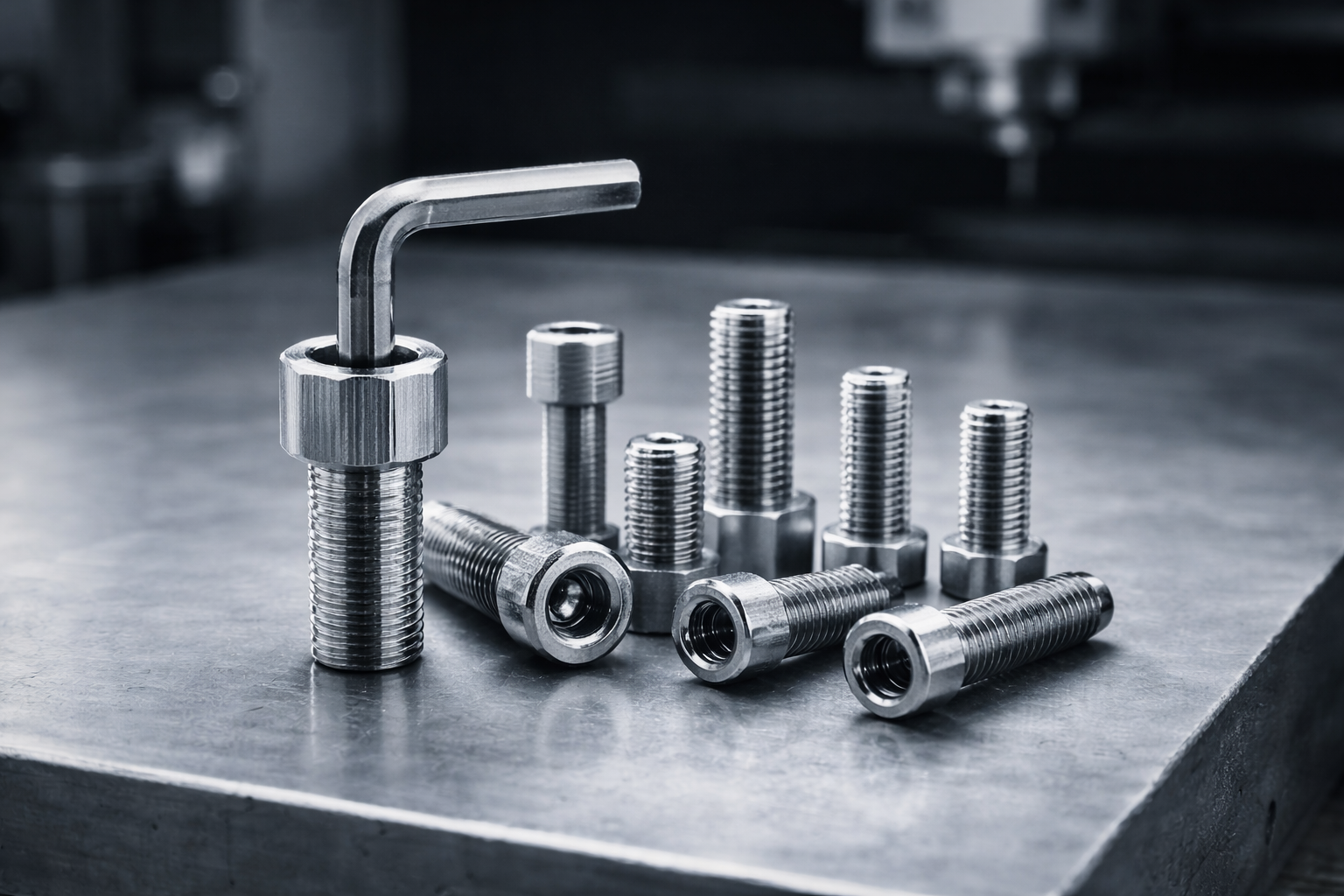
An Allen key bolt is one of those components that you encounter everywhere in manufacturing yet rarely give proper consideration until something goes wrong. Officially termed a socket head cap screw, this fastener features a cylindrical head with a hexagonal recess designed specifically for an Allen key or hex wrench. From assembling precision machinery in Pune’s automotive plants to securing components in Mumbai’s electronics enclosures, the Allen key bolt provides a combination of high strength, compact profile, and reliable torque transmission that makes it indispensable.
Whether you need a single replacement allen key bolt 10mm for equipment repair or are specifying fasteners for a new production line, the decisions you make about these small components have outsized consequences. Using the wrong grade can lead to joint failure. Choosing incorrect dimensions can damage threads or compromise clamping force. This article provides the technical knowledge required to make informed procurement decisions, with practical guidance on everything from allen key bolt and nut combinations to the use of an allen key bolt opener for damaged fasteners. We also address common questions about allen key bolt cap styles, allen key bolt name variations, and where to buy allen key bolt products at competitive INR prices in India.
Table of Contents
What Is an Allen Key Bolt? Definition and Terminology
The allen key bolt derives its name from the Allen Manufacturing Company, which popularised the hexagonal socket drive system in the early twentieth century. Today, the term is used generically to describe any bolt with an internal hexagonal drive recess, regardless of the actual manufacturer. The correct technical designation is socket head cap screw, and these fasteners are manufactured to international standards including ISO 4762 and DIN 912. Understanding the precise meaning allen key bolt is essential for accurate procurement because confusion with similar fasteners can lead to costly ordering errors.
The Anatomy of an Allen Key Bolt
An allen key bolt consists of a cylindrical head with a flat or slightly domed top surface and a precisely broached hexagonal socket. The shank extends from the bearing surface beneath the head and may be fully threaded or partially threaded. Fully threaded bolts provide maximum grip length and are suitable for applications where the clamped thickness varies or where maximum thread engagement is required in a blind hole. Partially threaded bolts feature an unthreaded grip section that provides superior shear strength and better alignment in precision assemblies.
The allen key bolt name varies across industries and regions. In addition to socket head cap screw, you may encounter terms such as hex socket bolt, Allen head bolt, or simply Allen screw. The definition allen key bolt in engineering terms is a high-strength fastener with an internal wrenching feature that allows installation in confined spaces where external wrench clearance is limited. This unique geometry enables the bolt head to be recessed into counterbored holes, creating a flush or sub-flush assembly that is both aesthetically clean and functionally safe.
Distinguishing Features from Other Fasteners
It is important to distinguish an allen key bolt from visually similar fasteners. A button head socket screw has a lower profile, domed head and is designed for lighter clamping applications where head height must be minimised. A flat head socket screw features a conical bearing surface that sits flush with the workpiece when installed in a countersunk hole. A socket set screw, often called a grub screw, has no head and is used to secure collars, pulleys, and knobs to shafts. Each of these variations serves specific purposes, but the standard allen key bolt remains the preferred choice for high-strength structural joints.
Allen Key Bolt Head Types: Cap, Button, Countersunk, and More
The performance and appearance of an assembled joint are significantly influenced by the allen key bolt head types selected. Each head style offers distinct advantages in terms of bearing surface area, head height, and aesthetic integration. Selecting the correct head type is as important as choosing the right size and material grade.
Standard Socket Head Cap
The standard allen key bolt cap style features a cylindrical head with a flat bearing surface and a flat or slightly chamfered top. This is the most common allen key bolt head type and provides the largest bearing surface area for distributing clamping loads. The head diameter is typically 1.5 times the nominal thread diameter, providing ample surface contact to prevent embedding in softer materials. The head height is approximately equal to the thread diameter, offering sufficient socket depth for reliable wrench engagement.
Applications: General machinery assembly, structural joints, mould and die construction, and any application requiring maximum clamping force and reliability.
Low Head Socket Cap
Low head allen key bolt variants have a reduced head height, typically about half that of a standard socket head. This design is used where clearance above the bolt head is limited, such as inside machinery enclosures or on moving assemblies where a standard head would cause interference. The trade-off is a shallower socket depth, which requires careful wrench engagement to prevent stripping.
Applications: Confined spaces, sliding mechanisms, cover plates with limited clearance.
Button Head Socket Cap
Button head allen key bolt styles feature a low-profile, domed head with a wider bearing surface than a standard socket head. The dome provides a finished appearance and eliminates sharp edges. However, the socket depth is shallower, and the drive size is often smaller than a comparable standard socket head, limiting the torque that can be applied.
Applications: Consumer products, enclosures where appearance matters, applications with moderate clamping requirements.
Flat Head Socket Cap (Countersunk)
Flat head allen key bolt designs incorporate a conical bearing surface that mates with a countersunk hole in the workpiece. When properly installed, the head sits flush with or slightly below the surface, creating a smooth, snag-free assembly. These bolts are essential for applications where protruding heads would interfere with function or create safety hazards.
Applications: Moving machinery parts, sliding surfaces, tooling fixtures, and aesthetic assemblies.
Mandatory Table: Allen Key Bolt Head Types Comparison
| Head Type | Key Features | Bearing Surface | Typical Applications | Relative Cost Factor |
|---|---|---|---|---|
| Standard Socket Cap | Maximum socket depth, highest strength | Large flat surface | General machinery, structural joints | 1.0x (Baseline) |
| Low Head Socket Cap | Reduced head height, shallower socket | Moderate flat surface | Confined spaces, low clearance | 1.2x |
| Button Head Socket Cap | Domed profile, wider bearing area | Large domed surface | Consumer products, enclosures | 1.1x |
| Flat Head Countersunk | Conical bearing, flush installation | Countersunk recess | Moving parts, fixtures | 1.3x |
Complete Allen Key Bolt Size Chart (Metric with INR Pricing)
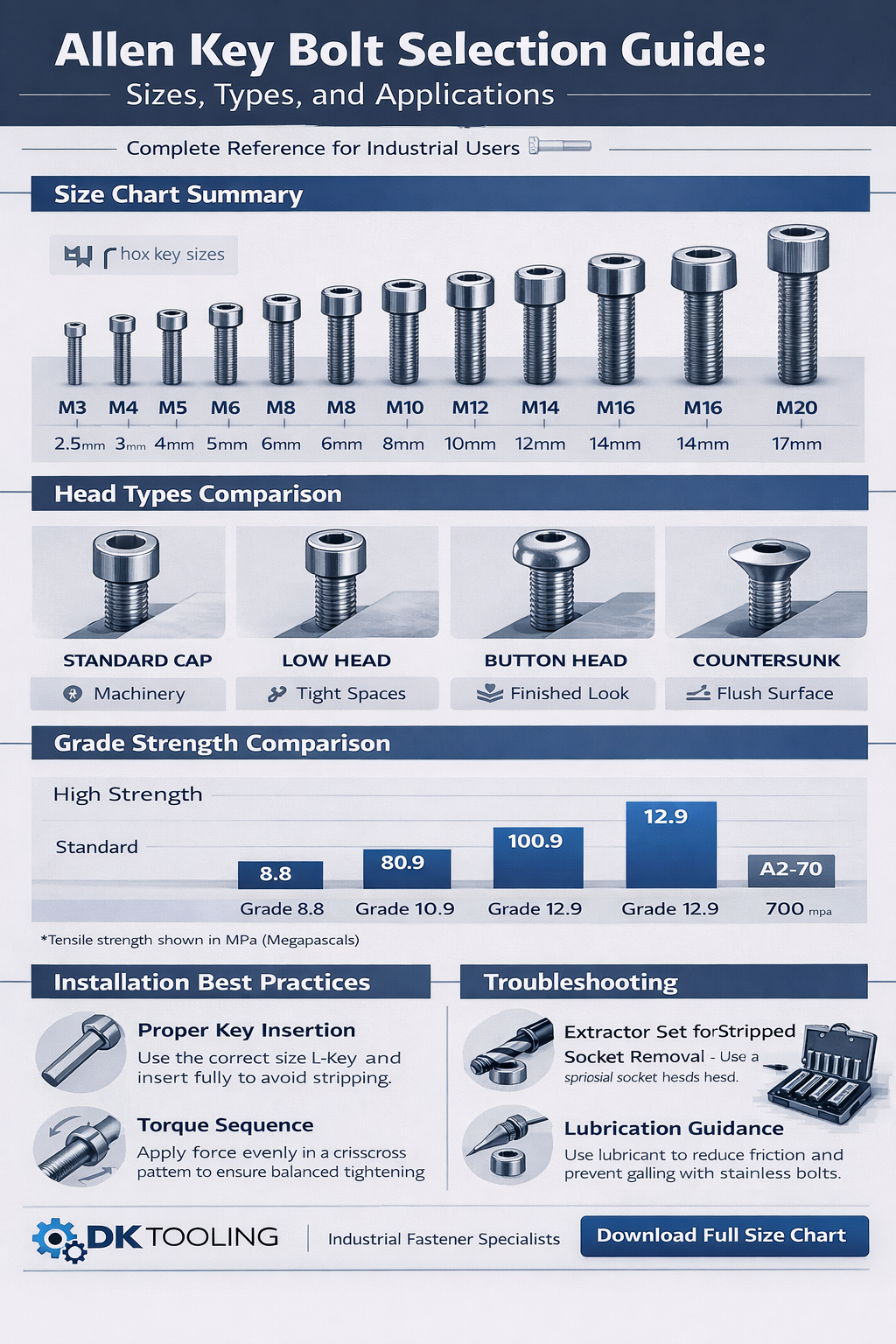
Understanding the allen key bolt size chart is fundamental to proper fastener selection. Metric allen key bolt dimensions are designated by the nominal diameter (M value) and the thread pitch. Standard allen key bolt size ranges from M1.6 for miniature applications to M64 for heavy industrial use, though the most common sizes in Indian workshops fall between M3 and M24.
Standard Metric Allen Key Bolt Dimensions
The dimensions allen key bolt include head diameter, head height, socket size (the allen key bolt size of the hex drive), and thread specifications. The table below provides essential reference data along with indicative INR pricing for common sizes in grade 10.9 black oxide finish.
Mandatory Table: Allen Key Bolt Size Chart with INR Pricing (Grade 10.9, Black Oxide)
| Nominal Size (Metric) | Thread Pitch (mm) | Head Diameter (mm) | Head Height (mm) | Hex Socket Size (mm) | Typical Length Range (mm) | Indicative Price Range (INR per 100 pcs) |
|---|---|---|---|---|---|---|
| M3 | 0.5 | 5.5 | 3.0 | 2.5 | 6 – 25 | ₹120 – ₹250 |
| M4 | 0.7 | 7.0 | 4.0 | 3.0 | 8 – 40 | ₹150 – ₹300 |
| M5 | 0.8 | 8.5 | 5.0 | 4.0 | 10 – 50 | ₹180 – ₹350 |
| M6 | 1.0 | 10.0 | 6.0 | 5.0 | 12 – 60 | ₹220 – ₹400 |
| M8 | 1.25 | 13.0 | 8.0 | 6.0 | 16 – 80 | ₹300 – ₹550 |
| M10 | 1.5 | 16.0 | 10.0 | 8.0 | 20 – 100 | ₹450 – ₹750 |
| M12 | 1.75 | 18.0 | 12.0 | 10.0 | 25 – 120 | ₹600 – ₹1,000 |
| M16 | 2.0 | 24.0 | 16.0 | 14.0 | 30 – 160 | ₹1,200 – ₹2,000 |
| M20 | 2.5 | 30.0 | 20.0 | 17.0 | 40 – 200 | ₹2,000 – ₹3,500 |
Note: Prices are indicative for grade 10.9 black oxide finish in standard lengths. Stainless steel and higher grades command premium pricing. Contact DK Tooling for current price allen key bolt quotations on specific sizes and quantities.
Finding the Right Allen Key Bolt 10mm and Other Sizes
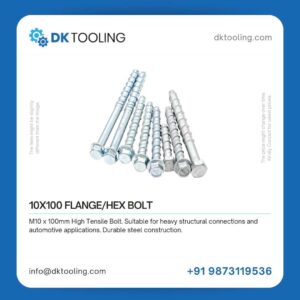
A common search query is allen key bolt 10mm, which refers to the M10 nominal diameter. When ordering, it is essential to specify the exact length required in addition to the diameter. For metric allen key bolt sizes, the designation follows the format M10 x 30, indicating a 10mm diameter bolt with 30mm length measured from under the head.
Material Grades Explained: 8.8, 10.9, 12.9, and Stainless Steel
The mechanical performance of an allen key bolt is fundamentally determined by its material grade. The grade designation indicates tensile strength and yield strength, which dictate how much clamping force the fastener can generate and sustain. Using an under-specified grade is a primary cause of joint failure in industrial assemblies.
Grade 8.8 Allen Key Bolts
Grade 8.8 allen key bolt fasteners are manufactured from medium carbon steel that has been quenched and tempered. The designation indicates a nominal tensile strength of 800 MPa and a yield strength of 640 MPa (800 × 0.8). These bolts offer a good balance of strength and cost, making them suitable for general engineering applications where loads are moderate and failure consequences are manageable. Grade 8.8 allen key bolt products are commonly zinc plated for corrosion protection and represent the most economical choice for non-critical applications.
Typical Applications: General fabrication, light machinery, enclosures, agricultural equipment, and indoor structural connections.
Grade 10.9 Allen Key Bolts
Grade 10.9 is the standard specification for industrial allen key bolt applications. With a tensile strength of 1000 MPa and yield strength of 900 MPa, these fasteners provide significantly higher clamping capability than grade 8.8. They are manufactured from alloy steels and undergo precise heat treatment to achieve consistent mechanical properties. Most unbrako allen key bolt products and premium industrial fasteners are supplied in grade 10.9 or higher. The black allen key bolt finish commonly seen on these fasteners is black oxide, which provides minimal corrosion resistance but reduces friction and improves appearance.
Typical Applications: Automotive components, machine tools, hydraulic systems, structural steel connections, and any application where joint reliability is critical.
Grade 12.9 Allen Key Bolts
The highest common property class, grade 12.9, delivers tensile strength of 1200 MPa and yield strength of 1080 MPa. These allen key bolt fasteners are used in the most demanding applications where maximum strength is required within limited space. However, the extreme hardness that enables this strength also reduces ductility, making grade 12.9 bolts more susceptible to hydrogen embrittlement and notch sensitivity. They should be specified only when the application genuinely demands their capabilities.
Typical Applications: Cylinder head bolts, connecting rod bolts, high-pressure flange connections, and heavy machinery structural joints.
Stainless Steel Allen Key Bolts (A2 and A4)
Stainless steel allen key bolt options provide inherent corrosion resistance without plating. A2 stainless (304 grade) is suitable for most atmospheric and freshwater environments. A4 stainless (316 grade) contains molybdenum for enhanced resistance to chlorides and is specified for marine and chemical processing applications. Reviews allen key bolt products consistently note that stainless fasteners should not be substituted for high-strength alloy steel bolts in critical load-bearing applications, as their tensile strength is typically lower.
Allen Key Bolt and Nut: Proper Pairing for Secure Joints
Many industrial assemblies utilise allen key bolt and nut combinations rather than tapped holes. Proper pairing of bolt and nut is essential for achieving the designed clamping force and preventing premature loosening. The nut must match the bolt in terms of thread specification and, ideally, material grade.
Selecting Compatible Nuts
For a grade 10.9 allen key bolt, a grade 10 nut should be specified. Using a lower grade nut creates a weak link in the joint that can strip before the bolt reaches its designed preload. The nut height should provide sufficient thread engagement, typically a minimum of 0.8 times the nominal diameter for standard hex nuts. Nyloc nuts with nylon inserts provide resistance to vibrational loosening and are commonly paired with allen key bolt fasteners in machinery applications.
Washer Considerations
A hardened flat washer should be used under the nut or bolt head when the bearing surface is softer than the fastener, such as when fastening into aluminium or when the mounting surface is uneven or painted. The washer distributes the clamping load and prevents embedding. Spring washers provide some resistance to loosening but are less effective than proper preload and thread-locking compounds.
Female Allen Key Bolt Applications
The term female allen key bolt typically refers to threaded inserts or standoffs that accept a male threaded fastener. These components feature an internal hex socket for installation using an Allen key and provide a threaded receptacle in materials that cannot be tapped directly. They are widely used in electronics enclosures and sheet metal assemblies.
How to Use an Allen Key Bolt Opener for Damaged Fasteners
Every maintenance technician eventually encounters a stripped or seized allen key bolt. The hexagonal socket becomes rounded, preventing the Allen key from gripping and transmitting torque. An allen key bolt opener or damaged fastener extractor is essential for removing such bolts without damaging the surrounding components.
Types of Allen Key Bolt Openers
Several tools function as an allen key bolt opener. The simplest is a screw extractor set, which consists of left-hand spiral bits that bite into the damaged socket as they are turned anticlockwise. More specialised tools include tapered hex extractors that are driven into the rounded socket with a hammer, creating a new gripping surface. For severely damaged bolts, a drill and extractor combination may be required, where the head is drilled to accept a reverse-thread extractor.
Procedure for Removing a Damaged Allen Key Bolt
First, attempt to clean the socket thoroughly. Debris and corrosion can prevent proper key engagement even when the socket is not significantly damaged. Apply penetrating oil and allow it to work for several minutes. Select a high-quality Allen key of the correct size; worn keys are a primary cause of socket damage. If the key slips, try a slightly oversized key or a Torx bit that can be driven into the damaged hex. As a final resort, use a damaged allen key bolt opener extractor. If the bolt head is accessible, locking pliers may grip the outer diameter of the head.
Preventing Allen Key Bolt Damage
Prevention is always preferable to extraction. Always use high-quality wrenches allen key bolt tools that are correctly sized. Ensure the key is fully seated in the socket before applying torque. Apply torque smoothly rather than with sudden impact. For stainless steel fasteners, use anti-seize compound to prevent galling and seizing. When reassembling, use a torque wrench to avoid over-tightening.
Allen Key Bolt Dimensions and Thread Standards
Precision in allen key bolt specification requires understanding of the governing international standards. The primary standards for metric socket head cap screws are ISO 4762 and DIN 912. These standards define all dimensions allen key bolt including head diameter, head height, socket depth, thread length, and tolerances.
ISO 4762 vs. DIN 912
ISO 4762 is the current international standard that superseded the German DIN 912. For practical purposes, allen key bolt fasteners manufactured to either standard are dimensionally interchangeable across the most common size range (M3 to M24). The primary differences affect very small sizes (M1.6, M2) and very large sizes (above M36). When specifying fasteners for new designs, ISO 4762 should be referenced. For maintenance and replacement, either standard is generally acceptable.
Thread Specifications
Standard metric allen key bolt threads are coarse pitch unless otherwise specified. Fine pitch threads are available for specialised applications and are designated with the pitch value, such as M10 x 1.0. Fine threads provide better resistance to vibrational loosening and higher tensile strength for a given diameter due to the larger minor diameter.
Top Brands for Allen Key Bolts in India: Unbrako, Taparia, Stanley
The Indian market offers allen key bolt fasteners from numerous manufacturers and importers. Understanding the brand landscape helps procurement professionals balance quality, availability, and cost.
Unbrako Allen Key Bolt
Unbrako bolt products are among the most recognised premium fasteners in the industrial market. The Unbrako brand originated in the United States and has been synonymous with high-quality socket screws for over a century. Genuine Unbrako fasteners are manufactured to exacting standards with consistent material properties and dimensional accuracy. In India, Unbrako products are available through authorised distributors and command a premium price allen key bolt relative to generic alternatives. For critical applications where failure is not an option, Unbrako remains the benchmark.
Taparia Allen Bolt
Taparia allen key bolt products are manufactured by Taparia Tools Limited, a well-established Indian hand tool manufacturer. Taparia has expanded into fastener production, offering a range of socket head cap screws that balance quality and affordability. Taparia fasteners are widely available through industrial supply channels across India and represent a reliable mid-market option.
Stanley Bolt
Stanley bolt products are part of the Stanley Black & Decker portfolio, one of the world’s largest tool manufacturers. Stanley fasteners are available through both industrial and retail channels, making them accessible for maintenance replacement allen bolt needs as well as production requirements. The brand recognition and global quality systems provide assurance of consistent product quality.
Other Notable Brands
The Indian market also includes fasteners from brands such as TVS, Sundram, and numerous regional manufacturers. When evaluating brand bolt options, consider traceability, availability of material certifications, and consistency of supply. For key bolt for sale online, DK Tooling offers a curated selection of premium brands with full documentation.
Buying Allen Key Bolt Online and Nearby
Many buyers search for bolt nearby or online bolt sources. DK Tooling serves customers across India with fast shipping from central warehouses. For those seeking allen bolt under 1000 INR for small quantities, assortment kits provide excellent value. Small allen key bolt sizes (M2 to M4) are available in convenient packs for electronics and instrumentation applications.
Unbrako Allen Key Bolt
Unbrako allen key bolt products are among the most recognised premium fasteners in the industrial market. The Unbrako brand originated in the United States and has been synonymous with high-quality socket screws for over a century. Genuine Unbrako fasteners are manufactured to exacting standards with consistent material properties and dimensional accuracy. In India, Unbrako products are available through authorised distributors and command a premium price bolt relative to generic alternatives. For critical applications where failure is not an option, Unbrako remains the benchmark.
Taparia Allen Key Bolt
Taparia allen key bolt products are manufactured by Taparia Tools Limited, a well-established Indian hand tool manufacturer. Taparia has expanded into fastener production, offering a range of socket head cap screws that balance quality and affordability. Taparia fasteners are widely available through industrial supply channels across India and represent a reliable mid-market option.
Stanley Allen Key Bolt
Stanley allen key bolt products are part of the Stanley Black & Decker portfolio, one of the world’s largest tool manufacturers. Stanley fasteners are available through both industrial and retail channels, making them accessible for maintenance replacement allen key bolt needs as well as production requirements. The brand recognition and global quality systems provide assurance of consistent product quality.
Other Notable Brands
The Indian market also includes fasteners from brands such as TVS, Sundram, and numerous regional manufacturers. When evaluating brand bolt options, consider traceability, availability of material certifications, and consistency of supply. For key bolt for sale online, DK Tooling offers a curated selection of premium brands with full documentation.
Buying Allen Key Bolt Online and Nearby
Many buyers search for allen key bolt nearby or online bolt sources. DK Tooling serves customers across India with fast shipping from central warehouses. For those seeking allen bolt under 1000 INR for small quantities, assortment kits provide excellent value. Small allen key bolt sizes (M2 to M4) are available in convenient packs for electronics and instrumentation applications.
“Selecting the correct industrial tool—or in this case, fastener—improves efficiency, safety, and machine lifespan. I have investigated numerous equipment failures where a ₹10 allen key bolt was substituted for a specified ₹50 high-tensile fastener. The result was a ₹5 lakh repair bill and weeks of lost production. Never compromise on fastener grade. The savings are an illusion. Always verify the head markings and source from reputable suppliers.”
— Senior Reliability Engineer, Indian Heavy Engineering SectorFrequently Asked Questions
1. What is the difference between an Allen key bolt and a regular hex head bolt?
An allen key bolt features a cylindrical head with an internal hexagonal drive recess, whereas a regular hex head bolt has an external hexagonal head driven by a spanner or socket. The internal drive allows the allen key bolt head to be more compact and enables installation in recessed counterbores or confined spaces where a spanner cannot access. Socket head cap screws are manufactured to higher strength specifications as standard, typically grade 10.9 or 12.9, compared to the grade 8.8 common for hex head bolts. This makes the allen key bolt the preferred choice for high-strength, space-constrained applications in precision machinery and industrial equipment.
2. How do I determine the correct bolt size for my application?
To determine the correct allen key bolt size, measure the major diameter of the threaded portion using a vernier caliper or thread gauge. For metric bolts, the size is designated as “M” followed by the nominal diameter in millimetres (e.g., M8 for 8mm diameter). The length is measured from the bearing surface under the head to the end of the threaded portion. Refer to an allen size chart to verify the corresponding hex key size and head dimensions. For replacement applications, measuring the existing bolt and matching it to the dimensions bolt in ISO 4762 or DIN 912 standards ensures correct fitment.
3. What are the different allen key bolt head types and when should I use each?
The primary bolt head types include standard socket cap, low head socket cap, button head socket cap, and flat head countersunk. Standard socket cap provides maximum strength and socket depth for general industrial use. Low head is used where clearance above the bolt head is restricted. Button head offers a domed, finished appearance for consumer products and enclosures. Flat head countersunk sits flush with the surface for moving parts and fixtures. The bolt cap style should be selected based on clearance constraints, aesthetic requirements, and the clamping force needed for the specific application.
4. What is an allen key bolt opener and how do I use it?
An key bolt opener or extractor is a specialised tool for removing fasteners with stripped or rounded hexagonal sockets. Common types include left-hand spiral screw extractors, tapered hex extractors, and drill-and-extractor combination sets. To use an bolt opener, first clean the socket and apply penetrating oil. If the socket is only partially damaged, try a slightly oversized Allen key or a Torx bit driven into the socket. For severe damage, select an extractor bit of appropriate size, drill a pilot hole if necessary, and turn the extractor anticlockwise to engage and remove the damaged bolt.
5. Can I use a stainless steel allen key bolt in a high-strength application?
Stainless steel bolt fasteners should not be substituted for high-strength alloy steel bolts in critical load-bearing applications. A typical A2-70 stainless allen key bolt has a tensile strength of approximately 700 MPa, which is comparable to a grade 8.8 carbon steel bolt but significantly lower than grade 10.9 (1000 MPa) or 12.9 (1200 MPa). If an application originally specified a grade 10.9 or 12.9 bolt, replacing it with a stainless fastener will result in a weaker joint that may fail under load. Stainless fasteners should be used where corrosion resistance is the primary requirement and strength demands are moderate.
6. Where can I buy genuine branded allen key bolts in India?
Genuine branded allen bolt products can be purchased from authorised industrial suppliers like DK Tooling. We offer unbrako key bolt, taparia bolt, and stanley bolt options with full traceability. We offer assortment kits and small quantity packs suitable for maintenance and repair applications.
7. What is the correct torque for tightening an allen key bolt?
The correct torque for an allen bolt depends on the bolt diameter, material grade, thread pitch, and lubrication condition. As a general guideline for dry, unlubricated grade 10.9 metric bolt fasteners: M6 requires approximately 10-12 Nm, M8 requires 25-30 Nm, M10 requires 50-60 Nm, and M12 requires 85-100 Nm. Always consult manufacturer torque tables for critical applications. Use a calibrated torque wrench with appropriate hex bit sockets (ratchets & sockets bolt drivers) to ensure accurate torque application. Over-tightening can cause bolt failure or thread damage, while under-tightening leads to joint loosening.
8. What does the black finish on allen key bolts indicate?
The black bolt finish is typically black oxide, a conversion coating that provides mild corrosion resistance and reduces friction during installation. Black oxide does not significantly increase the bolt dimensions and is commonly used on high-strength grade 10.9 and 12.9 fasteners. It offers less corrosion protection than zinc plating but is preferred for applications where precise dimensional tolerances must be maintained. For outdoor or corrosive environments, zinc-plated or stainless steel allen bolt options should be considered. Images bolt on product pages typically show the finish accurately for reference.
Posts Widget
-
1
-
2
-
3


dk-tooling-logo-horizontal-inverse
DK Tooling and Industrial Solution
Welcome to DK Tooling, your trusted partner in precision tooling and manufacturing solutions. With decades of experience in the industry, we specialize in providing high-quality, reliable tooling solutions for a wide range of sectors, including automotive, aerospace, medical, and consumer goods.
Copyright 2025 © Partdo WordPress Theme. All right reserved. Powered by KLBTheme.



You must be logged in to post a comment.