

Industrial Cutting Blades: The Complete Guide to Types, Materials, and Applications

A cutting blade is the critical interface between a machine tool and the workpiece. Whether you are sectioning structural steel, ripping timber, or precision-cutting ceramic tiles, the performance of your operation hinges on selecting the correct cutting blade. A mismatch between blade and material results in slow cutting, poor edge quality, excessive heat generation, and dramatically shortened blade life.
The term cutting blade encompasses a wide array of tools: circular saw blades for wood and metal, bandsaw blades for continuous cutting, hacksaw blades for manual and powered sawing, abrasive wheels for sectioning hard materials, and diamond blades for masonry and tiles. Each cutting blade category has its own material science, tooth geometry, and application sweet spot.
What Is a Cutting Blade? Fundamental Types and Terminology
A cutting blade is a tool consisting of a disc, band, or strip with a toothed or abrasive edge, designed to remove material from a workpiece through a shearing or grinding action. In industrial contexts, cutting blade selection is a precise engineering decision, not a matter of grabbing the first blade that fits the machine. The primary categories of cutting blade types found in Indian workshops and factories include:
Circular Saw Blades
Circular saw blades are disc-shaped cutting blade tools with teeth around the circumference. They mount onto the arbor of a circular saw, table saw, or chop saw. They are the most versatile and widely used industrial cutting blade type, available in configurations for wood, metal, plastic, and composite materials. Key specifications include diameter, arbor size, kerf thickness, and tooth count.
Bandsaw Blades
A bandsaw cutting blade is a continuous, flexible steel band with teeth along one edge. It runs on two or more wheels and provides a continuous cutting action. Bandsaw blades excel at cutting irregular shapes, resawing timber, and sectioning metal stock. They are available in various widths, tooth pitches, and materials, including bi-metal and carbide-tipped configurations.
Hacksaw Blades
Hacksaw blades are straight, toothed blades used in both manual hacksaw frames and powered hacksaw machines. They are a simple, cost-effective cutting blade for metal sectioning, particularly for small-diameter bars, tubes, and profiles. They are typically made from High-Speed Steel (HSS) or bi-metal.
Abrasive Cut-off Wheels
Abrasive wheels are a type of cutting blade that uses bonded abrasive grains rather than teeth to remove material. They are essential for cutting hardened steel, stainless steel, and other difficult-to-machine materials where toothed blades would dull rapidly. They are also the primary cutting blade for masonry, concrete, and tiles when diamond blades are not used.
Diamond Blades
Diamond blades are circular cutting blade tools with industrial diamond crystals bonded to the rim. They are the premier choice for cutting extremely hard, abrasive materials such as concrete cutting blade applications, marble cutting blade, granite, ceramic tile cutting blade, and glass cutting blade. They cut by grinding rather than shearing and offer exceptional life in these demanding applications.
Circular Saw Blades: The Workhorse of Industrial Cutting
The circular saw blade is the most common cutting blade tool in industrial and construction settings. Understanding its anatomy and specifications is fundamental to proper selection.
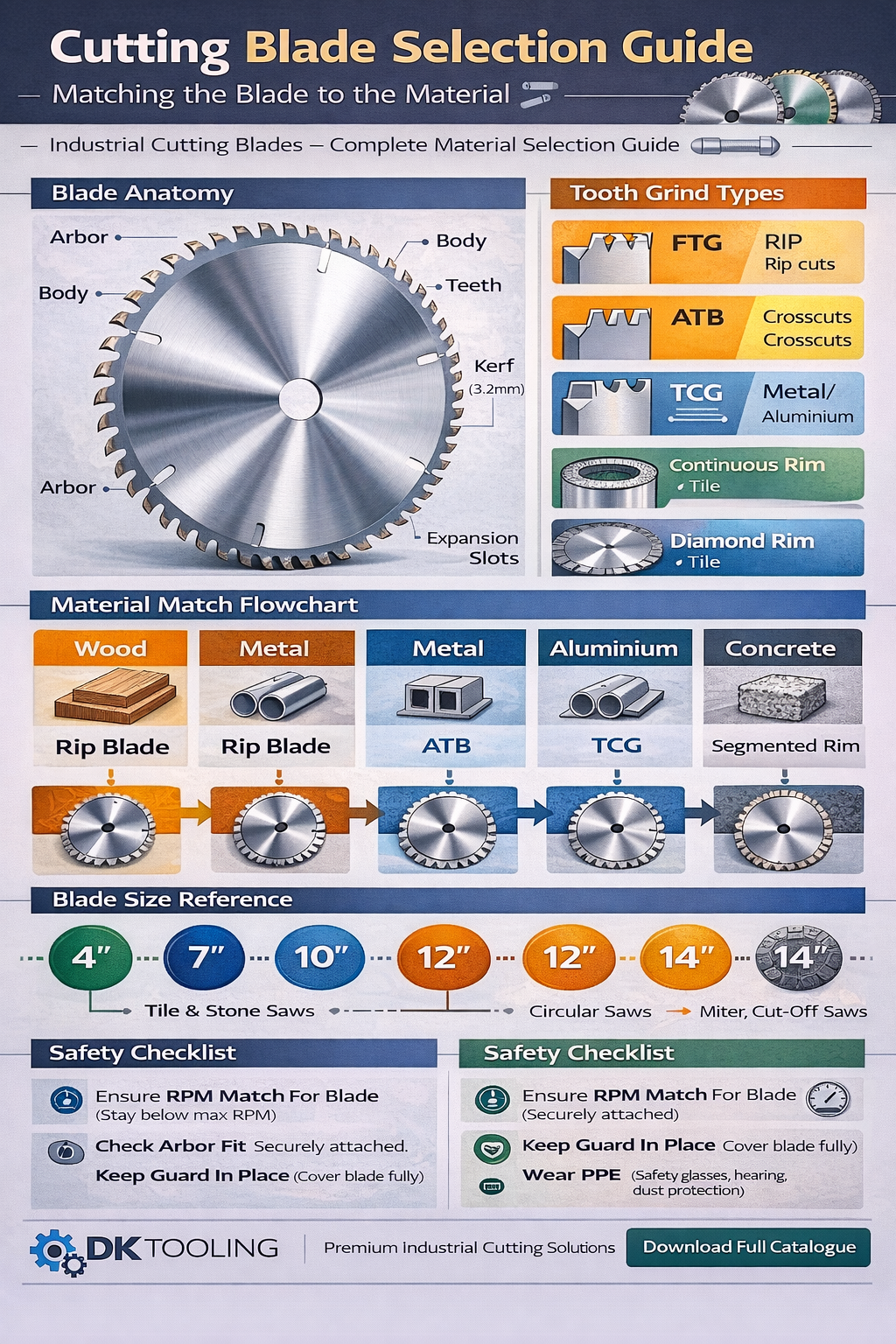
Blade Anatomy
- Arbor Hole: The central hole that mounts the cutting blade onto the machine’s spindle. Common arbor sizes are 16mm, 20mm, 22.23mm, 25.4mm (1 inch), and 30mm. The arbor must match the machine exactly.
- Body (Plate): The steel disc that forms the main structure of the blade. High-quality blades feature expansion slots cut into the body to dissipate heat and prevent warping.
- Teeth: The cutting elements, usually made of carbide tips brazed onto the steel body. The number, shape, and angle of the teeth determine the blade’s application.
- Kerf: The width of the cut made by the blade. The kerf is slightly wider than the blade body to prevent binding. Thin kerf blades remove less material and require less power.
Types of Circular Saw Blades by Application
- Rip Blades: Designed for cutting along the grain of wood. They have a low tooth count (typically 24 teeth on a 10-inch blade) with large gullets for efficient chip clearance.
- Crosscut Blades: Designed for cutting across the wood grain. They have a higher tooth count (60 to 80 teeth) and an alternate top bevel (ATB) tooth grind for clean, splinter-free cuts.
- Combination Blades: A versatile cutting blade designed for both ripping and crosscutting in general-purpose woodworking. They feature a mix of tooth geometries and typically 40 to 50 teeth.
- Metal Cutting Blades: Specifically engineered cutting blade for metal applications. They are available in various types: HSS blades for softer metals, carbide-tipped blades for steel, and specialised blades for non-ferrous metals like aluminium. A metal cutting blade for circular saw use must match the saw’s RPM rating.
Cutting Blade Materials: Carbide, HSS, Diamond, and Abrasive
The material of the cutting blade teeth or cutting edge dictates which workpiece materials it can effectively cut and for how long.
High-Speed Steel (HSS)
HSS blades are an economical cutting blade option for general-purpose metal cutting. They are tougher than carbide and less prone to chipping, making them suitable for interrupted cuts and cutting softer materials. However, HSS softens at elevated temperatures, limiting cutting speeds and reducing edge life in harder materials. HSS hacksaw blades and some circular metal cutting blade options use this material.
Carbide-Tipped (TCT)
Tungsten carbide-tipped blades are the industry standard for demanding industrial applications. Carbide retains its hardness at high temperatures, allowing for faster cutting speeds and significantly longer blade life compared to HSS. Carbide-tipped blades are available for wood, metal, plastics, and composites. The quality of the carbide grain and the braze joint determines the blade’s performance and cutting blade price.
Bi-Metal
Bi-metal cutting blade construction is common for bandsaw and hacksaw blades. A flexible, fatigue-resistant alloy steel backing strip is welded to a high-speed steel tooth edge. This combines the flexibility needed to withstand the constant bending around saw wheels with the wear resistance of HSS teeth. Bi-metal blades are the standard for industrial metal sawing.
Diamond
Diamond blades use synthetic diamond crystals bonded to the rim of a steel core. The diamond matrix grinds through extremely hard materials. Diamond blades are essential for tile cutting blade, marble cutting blade, concrete cutting blade, and glass cutting blade operations. They are available in segmented, continuous rim, and turbo rim configurations for different materials and cut quality requirements.
Abrasive
Abrasive cut-off wheels are composed of abrasive grains (aluminium oxide, silicon carbide) bonded together with a resin. They are consumable cutting blade tools that wear away as they cut. They are used for sectioning hardened steel, stainless steel, and masonry materials.
Tooth Geometry and Its Impact on Cut Quality
The shape and angle of the teeth on a cutting blade determine the type of cut produced.
Tooth Grind Types
- Flat Top Grind (FTG): Teeth have a flat top surface. This grind is aggressive and efficient for ripping wood. It leaves a rougher finish but removes material quickly.
- Alternate Top Bevel (ATB): Teeth are alternately bevelled left and right. This creates a sharp point that scores the material fibres before the main cut, producing a clean, splinter-free finish. Ideal for crosscutting wood and cutting plywood.
- Combination Tooth (ATBR): A pattern of FTG teeth for material removal and ATB teeth for finishing. Found on general-purpose combination blades.
- Triple Chip Grind (TCG): A trapezoidal tooth alternates with a flat raker tooth. This grind is exceptionally durable and is the standard for cutting blade for metal and cutting blade for aluminum. The trapezoidal tooth protects the corners of the flat tooth, extending blade life in abrasive materials.
Hook Angle
The hook angle is the forward or backward lean of the tooth. A positive hook angle (leaning forward) is aggressive and ideal for ripping wood. A low or negative hook angle is safer for cutting metal and plastic, reducing the tendency for the blade to grab the workpiece.
Selecting Cutting Blades by Material: Metal, Wood, Tiles, and More
Matching the cutting blade to the workpiece material is the most critical selection criterion.
Cutting Blade for Wood
Wood cutting blade selection depends on the type of cut. Use a rip blade (low tooth count, FTG) for cutting with the grain. Use a crosscut blade (high tooth count, ATB) for cutting against the grain. A combination blade offers a balance for general workshop use. For plywood and laminates, a high-tooth-count ATB blade minimises chipping.
Cutting Blade for Metal
Selecting a cutting blade for metal requires careful consideration. For mild steel and structural sections, a carbide-tipped circular metal cutting blade or a bi-metal bandsaw blade is recommended. Steel cutting blade options include specialised carbide blades with TCG grind. For cutting blade for aluminum and other non-ferrous metals, use a TCG blade with a negative or low hook angle to prevent grabbing. Lubrication is often essential when cutting aluminium. Diablo metal cutting blade products are a recognised premium brand in this category. For manual cutting, a cutting blade taparia hacksaw blade offers reliable performance.
Cutting Blade for Tiles and Masonry
For ceramic tile cutting blade work, a continuous rim diamond blade provides the cleanest, chip-free cut. For marble cutting blade and granite, a segmented or turbo rim diamond blade is more aggressive. For concrete cutting blade and wall cutting blade applications, segmented diamond blades or abrasive wheels are used, often with water cooling. Glass cutting blade requires a very fine, continuous rim diamond blade.
Cutting Blade for Other Materials
- Plastics: Use a TCG or high-tooth-count ATB blade with a low hook angle to prevent melting and chipping.
- Composites (FRP): Diamond blades or specialised carbide blades are required due to the abrasive nature of fibreglass.
Cutting Blade Sizes and Machine Compatibility
Cutting blade sizes are specified by the blade’s outer diameter and arbor hole diameter. The machine’s manual specifies the maximum and minimum blade diameters that can be safely used. Never mount an oversized blade on a machine, as it will exceed the designed rim speed and can be extremely dangerous. The arbor size must match the machine’s spindle exactly. Common cutting blade sizes for circular saws range from 4 inches (100mm) for trim saws to 14 inches (355mm) for chop saws and up to 20 inches (500mm) or more for large industrial saws.
Cutting Blade Selection Matrix with INR Price Guide
The table below provides a practical reference for selecting the correct cutting blade based on material and application, with indicative INR pricing for the Indian market.
Mandatory Table: Cutting Blade Selection Guide with INR Pricing
| Blade Type | Best Application | Workpiece Material | Typical Diameter | Indicative INR Price Range |
|---|---|---|---|---|
| TCT Wood Rip Blade | Ripping timber along grain | Softwood, Hardwood | 10″ (250mm) | ₹600 – ₹2,500 |
| TCT Wood Crosscut Blade | Clean crosscuts, plywood | Hardwood, Plywood, MDF | 10″ (250mm) | ₹800 – ₹3,500 |
| TCT Metal Cutting Blade | Sectioning steel sections | Mild Steel, Structural Steel | 14″ (355mm) | ₹2,500 – ₹8,000 |
| TCT Aluminium Blade | Cutting aluminium profiles | Aluminium, Brass, Copper | 12″ (300mm) | ₹1,800 – ₹6,000 |
| Bi-Metal Bandsaw Blade | Metal stock cutting | Steel, Stainless, Aluminium | Various Lengths | ₹800 – ₹4,000 |
| Diamond Tile Blade (Continuous Rim) | Clean tile cuts | Ceramic, Porcelain | 4.5″ (115mm) | ₹300 – ₹1,500 |
| Diamond Marble Blade (Segmented) | Marble, granite cutting | Natural Stone | 4.5″ (115mm) | ₹400 – ₹2,000 |
| Abrasive Cut-off Wheel | Hardened steel, masonry | Steel, Stainless, Concrete | 14″ (355mm) | ₹150 – ₹600 |
| Hacksaw Blade (HSS) | Manual metal cutting | Mild Steel, Aluminium | 12″ (300mm) | ₹50 – ₹300 |
| Glass Cutting Diamond Blade | Precision glass cutting | Glass | 4″ (100mm) | ₹250 – ₹1,200 |
Note: Prices are indicative for standard sizes and quality levels. Cutting blade price varies significantly based on brand (e.g., cutting blade taparia, diablo metal cutting blade), diameter, and specific material composition. Contact DK Tooling for current INR quotations on bulk orders and premium brands.
“Selecting the correct industrial tool improves efficiency, safety, and machine lifespan. This is especially true for cutting blades. I have seen workshops destroy expensive carbide blades by using a wood-cutting blade on aluminium, or struggle for hours because they used a fine-tooth blade for rough ripping. The right blade makes the job effortless; the wrong blade makes it dangerous. Take the time to match the blade to the material and the machine.”
— Senior Fabrication Manager, Indian Heavy Engineering Workshop
Products by Tag
-
3 INCH BLADE
Original price was: ₹260.00.₹220.00Current price is: ₹220.00. -
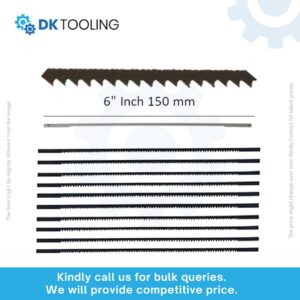
Heavy Duty 6-Inch Hacksaw Blades for Coping Saws | Industrial Grade Precision Cutting | 10-Pack LOVELY Pro Series
₹183.00 -

POWERTEC Bandsaw Blades 59.5 inch | Premium High Performance Wood Cutting Blades for 9 & 10 Inch Benchtop Saws | Heavy Duty Industrial Grade Steel for Resawing & Scroll Cuts
₹2,799.00 -

Premium 10 Inch Bandsaw Blade 2-Pack | 70-1/2″ x 1/2″ x 4 TPI | Heavy-Duty Resaw & Rip Blades for Craftsman 10″ Band Saws
₹3,000.00 -
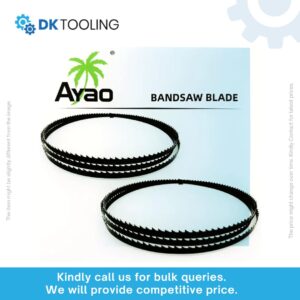
Premium Band Saw Blades 12TPI | 56-1/8″ x 1/4″ | High Performance Fine Cut Scroll & Curve Cutting Blades for 9″ Band Saws, 2-Pack
₹3,037.00 -
Premium High Carbon Bandsaw Blades | Industrial Grade Wood Cutting & Resaw Blade
Original price was: ₹3,000.00.₹2,222.00Current price is: ₹2,222.00.

Understanding cutting blade selection is one aspect of comprehensive workshop management. For a broader perspective on tooling and equipment, explore our Complete Guide to Industrial Tools . When specifying machinery to use these blades, our Industrial Tools & Equipment Buying Guide offers valuable decision-making frameworks. For insights into the Indian manufacturing ecosystem, read our analysis of Top 10 Industrial Tools Manufacturing Companies in India . For CNC-specific tooling, refer to our CNC Tool Holders Guide .
FAQs
1. What are the different cutting blade types used in industry?
The primary cutting blade types in industrial use include circular saw blades (for wood, metal, and plastics), bandsaw blades (continuous cutting of metal and wood), hacksaw blades (manual and powered sectioning), abrasive cut-off wheels (for hardened steel and masonry), and diamond blades (for tiles, stone, and concrete). Each type is designed for specific materials and machines. Circular saw blades are further categorised by tooth grind: FTG for ripping wood, ATB for crosscutting and clean finishes, and TCG for cutting metal and aluminium. The cutting blade tool selection must match the machine’s specifications and the material being processed.
2. How do I choose the right cutting blade for metal?
Selecting the correct cutting blade for metal depends on the metal type and the saw being used. For mild steel structural sections on a chop saw, a carbide-tipped (TCT) metal cutting blade with a Triple Chip Grind (TCG) is ideal. These blades run at lower RPMs than wood blades and produce clean cuts. For a bandsaw, a bi-metal blade with variable tooth pitch is the standard for steel cutting blade applications. For cutting blade for aluminum and non-ferrous metals, use a TCG blade with a negative or zero hook angle to prevent the blade from grabbing the workpiece. Always use appropriate lubrication and ensure the blade’s maximum RPM rating exceeds the machine’s spindle speed.
3. Can I use a wood cutting blade to cut metal?
Never use a standard wood cutting blade to cut metal. Wood blades have a high positive hook angle and tooth geometry designed for fibrous materials. Using one on metal is extremely dangerous. The aggressive hook angle will cause the blade to grab the metal workpiece, potentially leading to violent kickback. The teeth are not hard enough and will rapidly dull or shatter. The high RPM of wood-cutting saws is also inappropriate for metal cutting. Always use a dedicated metal cutting blade designed for the specific metal and the appropriate saw type (low-RPM chop saw or bandsaw).
4. What is the best cutting blade for tiles and marble?
The best cutting blade for tiles and marble is a diamond blade. For ceramic and porcelain tiles where a clean, chip-free edge is required, a continuous rim tile cutting blade is the preferred choice. The smooth, continuous diamond edge grinds through the hard, brittle material without chipping the glazed surface. For marble cutting blade and natural stone, a segmented or turbo rim diamond blade can be used for faster cutting, though it may leave a slightly rougher edge. Diamond blades can be used wet or dry, but wet cutting significantly extends blade life and reduces dust. Always use a diamond blade on an appropriate cutting blade machine such as a tile saw or angle grinder.
5. What do the numbers on a cutting blade mean?
The numbers on a cutting blade typically indicate its diameter, arbor size, maximum RPM, and tooth count. For example, a circular blade marked “250 x 30 x 2.4 x 80T” means: 250mm outer diameter, 30mm arbor hole, 2.4mm kerf thickness, and 80 teeth. The maximum safe RPM is also printed on the blade body. Never exceed this RPM. The tooth count provides a clue to the blade’s application: low tooth count (24-30T) for ripping, high tooth count (60-80T) for crosscutting or metal, and moderate tooth count (40-50T) for general-purpose combination blades. Understanding these cutting blade sizes and markings is essential for safe and effective use.
6. How do I extend the life of my industrial cutting blades?
Extending cutting blade life involves proper selection, use, and maintenance. First, always match the blade to the material. Using a fine-tooth blade for heavy ripping generates excessive heat and dulls teeth prematurely. Second, ensure the blade is sharp. A dull blade requires more feed pressure, generating friction and heat that accelerates wear. Third, keep blades clean. Pitch and resin build-up on wood blades insulates teeth and causes overheating. Use a blade cleaning solution regularly. Fourth, use appropriate feed rates and lubrication when cutting metal. For band saw blades, proper tension and break-in procedures are critical. Finally, store blades properly to prevent tooth damage.
7. What is the difference between a rip blade and a crosscut blade?
A rip cutting blade is designed to cut along the grain of wood. It typically has a low tooth count (e.g., 24 teeth on a 10″ blade) and a Flat Top Grind (FTG). The large gullets between teeth provide space for the long, stringy chips produced when ripping. It cuts aggressively and quickly but leaves a rougher surface. A crosscut cutting blade is designed to cut across the wood grain. It has a high tooth count (e.g., 60-80 teeth) and an Alternate Top Bevel (ATB) grind. The teeth slice the wood fibres cleanly, minimising tear-out and leaving a smooth finish. Using a rip blade for crosscutting results in a rough, splintered cut. Using a crosscut blade for ripping is slow and causes overheating.
8. Where can I find cutting blade price information and purchase in India?
Cutting blade price varies widely based on type, size, brand, and material. Local hardware stores stock basic blades, but for industrial applications, sourcing from a specialist supplier like DK Tooling is recommended. We offer competitive INR pricing on a full range of cutting blade products, including premium brands like Taparia, Diablo, and industrial-grade carbide and diamond blades. Our online catalogue provides clear specifications and allows you to compare cutting blade types. For bulk enquiries, we provide volume discounts and GST invoicing. Searching for a specific item like metal cutting blade for circular saw or cutting saw blade for metal on our website yields targeted results with current INR pricing.
Conclusion
The cutting blade is the point where machine meets material, where power is converted into precision or waste. A workshop equipped with the best machinery will still produce poor results if fitted with the wrong or dull blades. Understanding the different cutting blade types, the significance of tooth geometry, and the critical importance of matching the cutting blade to the specific material—whether it be metal cutting blade for steel, wood cutting blade for timber, or tile cutting blade for ceramics—is foundational knowledge for any industrial or construction professional.
For Indian businesses, sourcing quality blades from reliable suppliers ensures that your cutting operations are efficient, safe, and cost-effective. Whether you need a high-performance cutting blade taparia hacksaw blade, a precision diablo metal cutting blade, or a durable diamond blade for stone, the right choice pays dividends in productivity and finish quality. DK Tooling provides a comprehensive range of industrial cutting blade solutions with competitive INR pricing and expert technical support to help you select the optimal tool for every job.
Ready to elevate your cutting performance? Contact DK Tooling today for a personalised quotation or download our complete cutting blade catalogue for your records.
Posts Widget
-
1
-
2
-
3



dk-tooling-logo-horizontal-inverse
DK Tooling and Industrial Solution
Welcome to DK Tooling, your trusted partner in precision tooling and manufacturing solutions. With decades of experience in the industry, we specialize in providing high-quality, reliable tooling solutions for a wide range of sectors, including automotive, aerospace, medical, and consumer goods.
Copyright 2025 © Partdo WordPress Theme. All right reserved. Powered by KLBTheme.



You must be logged in to post a comment.